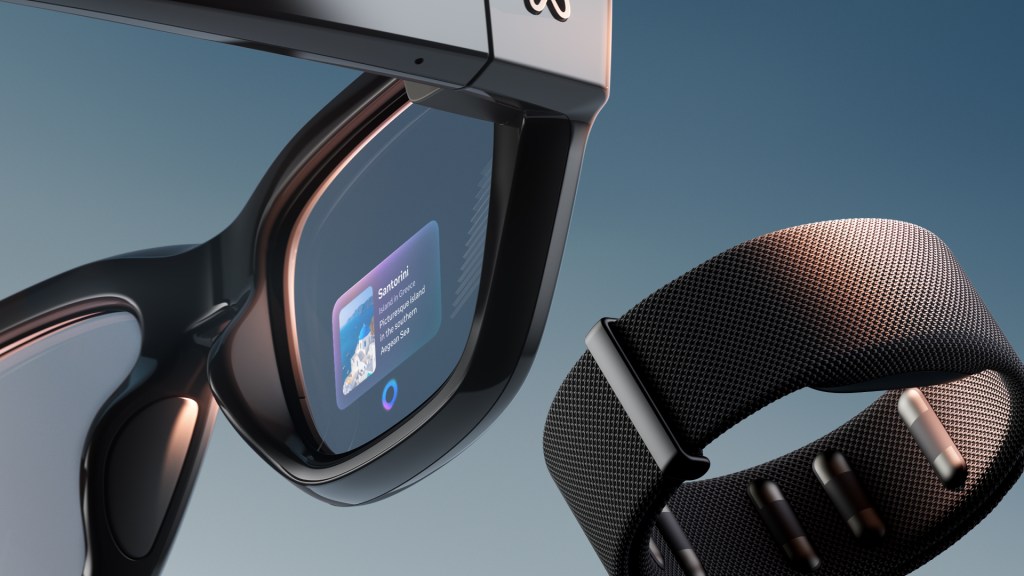

August 11, 2026: A Tom’s Guide experiment put ChatGPT on Ray-Ban Meta glasses to test whether the alternative assistant could replace Meta AI. The result is one reviewer’s account, not proof that ChatGPT works as a universal substitute. But it points to a broader question for today’s camera-equipped glasses: how much should the experience depend on the assistant behind the frames?

ChatGPT changes the question around Ray-Ban Meta
Ray-Ban Meta glasses are the packet’s mainstream reference point, which makes the Tom’s Guide test especially relevant. The writer connected ChatGPT to the glasses and explored whether it could take over a role normally associated with Meta AI. That is a practical experiment in changing the software experience without changing the frames themselves.
The important qualification is that the story describes an individual test. Its headline presents a strong personal assessment, but the supplied evidence does not establish that ChatGPT replaces Meta AI for every owner or every use case. It does show why assistant choice is becoming part of the smart-glasses conversation: the same hardware can feel different when the voice interaction and underlying AI service change.
For shoppers, that makes compatibility and everyday usefulness worth watching alongside the glasses’ physical design. The packet does not provide a broader performance comparison, so the safe takeaway is narrower: one reviewer found the ChatGPT connection materially changed how they used their Ray-Ban Meta glasses.
Source: I put ChatGPT on my Ray-Ban Meta glasses — and it completely changed how I used them
Privacy pressure follows smart-glasses adoption
A Vuzix vice president warned that privacy scrutiny is increasing as smart glasses move beyond early adopters and toward mainstream use. That warning places privacy beside convenience as a central question for camera-first AI glasses. The more ordinary these products become, the more often they will be used around people who did not choose to participate in the interaction.
A separate Traders Union report shows how that concern can become a venue-level policy. Various UK hospitality venues, including high-end restaurants, private clubs, and the largest pub chain, have prohibited customers from wearing the glasses or filming with them, citing privacy concerns. The supplied report does not describe a blanket UK-wide ban; it describes restrictions imposed by particular types of venues.
Together, the reports point to a practical limitation that product specifications alone cannot capture. A pair of glasses may be useful in one setting and unwelcome in another. Owners may need to think about visible recording indicators, social expectations, and venue rules before treating camera-equipped glasses as an everyday accessory.
That does not resolve the privacy debate, but it does make the issue concrete. Restrictions affect where the glasses can be worn, while increasing scrutiny may shape how comfortably people use them around strangers. Privacy is therefore becoming a direct usage and buying consideration, not just a background concern.
Source: Privacy scrutiny intensifies as Vuzix pushes smart glasses into mainstream
Meta backs community and accessibility programs
Meta has awarded nearly USD $2 million across 30 U.S. organizations through its AI Glasses Impact Grants program. This is an institutional investment rather than a retail product announcement. The evidence supplied here does not specify the individual organizations’ projects, outcomes, or how the funding will be used, so the clear point is the scale and structure of the grant effort.
The grant story sits alongside a more specific distribution effort in Indianapolis. Blind and visually impaired veterans are receiving Ray-Ban Meta glasses as high-tech tools intended to help them navigate daily life more independently. The wording matters: the supplied report describes the purpose of the glasses, not proven accessibility outcomes or a guarantee that every recipient will experience the same benefit.
These stories describe two different ways smart glasses are being placed in the community. The grant program spreads support across 30 organizations, while the Indianapolis effort focuses on a defined group of veterans. Both move the discussion beyond novelty and personal experimentation, while leaving the long-term results to be demonstrated through the programs themselves.
They also broaden the context in which Meta’s glasses are evaluated. A mainstream reference point can be judged not only by consumer features, but by how organizations and accessibility efforts attempt to use the platform. The packet does not claim that these programs settle the product’s value; it shows that institutional and community deployments are becoming part of the story.
Source: Meta Names Grant Recipients for AI Glasses Impact Program in the US
Indianapolis veterans receive Ray-Ban Meta tools
The Indianapolis report deserves its own distinction because it concerns direct support for blind and visually impaired veterans. The glasses are presented as tools intended to assist with daily navigation and greater independence. That description keeps the focus on the recipients and the intended use, rather than turning a specific distribution effort into a general claim about accessibility performance.
As with the grants, the supplied evidence does not provide measured results, technical details, or a broader assessment of how the glasses perform for blind users. What it does establish is a concrete deployment involving veterans in Indianapolis, adding an accessibility-focused example to the wider discussion around AI glasses.
Source: Blind veterans in Indianapolis receive Ray-Ban Meta smart glasses
What to watch in the next smart-glasses brief
Today’s packet leaves three developments in view. First, alternative AI integrations could change how owners use familiar hardware, although the ChatGPT test remains one reviewer’s experience. Second, privacy-related restrictions are already part of the practical conversation in some venues, alongside warnings that scrutiny is increasing. Third, grants and accessibility deployments show Meta’s glasses being considered in institutional and community settings.
None of these stories alone defines the category. Taken together, they show why the smart-glasses baseline is being tested from several directions at once: software flexibility, social permission, and usefulness beyond early-adopter experimentation. Those are the developments worth watching without stretching the supplied evidence into predictions.
Source: Meta Smart Glasses Face Ban Across UK Restaurants, Pubs and Theatres Over Privacy Fears
Continue Reading
For broader buying context, these guides cover the category’s major product types and comparisons.
Sources
- I put ChatGPT on my Ray-Ban Meta glasses — and it completely changed how I used them — Tom’s Guide
- Privacy scrutiny intensifies as Vuzix pushes smart glasses into mainstream — Traders Union
- Meta Names Grant Recipients for AI Glasses Impact Program in the US — Auganix.org
- Blind veterans in Indianapolis receive Ray-Ban Meta smart glasses — WRTV
- Meta Smart Glasses Face Ban Across UK Restaurants, Pubs and Theatres Over Privacy Fears — Times Now