Updated September 26, 2026. U.S. prices before tax. Meta’s new VR Glasses and camera-free Ray-Ban Meta Audio solve almost opposite problems: one puts a virtual screen in front of you; the other removes the camera while keeping listening and voice assistance. Neither makes the Quest lineup irrelevant.
This is a specification-based comparison, not a hands-on review. Announced hardware, preorder dates, planned shipping, and available products are labeled separately. Prices are starting prices unless a storage configuration is specified. Lenses, accessories, subscriptions, compatible phones and apps, workplace rules, regional AI availability, bundles, and paid content can all change the practical fit and total cost.
Meta glasses and Quest: price and function at a glance
These products share a company name, but they are not one ladder of increasingly capable glasses. Some are screen-free audio or camera products, one adds a small visual interface, one is designed for immersive viewing, and Quest remains a separate headset family. On mobile, swipe sideways to read the comparison.
20 comparison criteria across nine product families. Swipe horizontally on mobile. Battery claims use different workloads; case figures labeled additional are not the same as total runtime. “Not verified” means the cited sources do not establish the detail for this comparison, not that the manufacturer has never disclosed it. “Not applicable” means the feature does not apply.
| Product | Meta VR Glasses | Ray-Ban Meta Audio | Ray-Ban Meta Gen 3 | Meta Glasses / Adventurer | Meta Ray-Ban Display | Oakley Meta HSTN | Oakley Meta Vanguard | Meta Quest 3, 512GB | Meta Quest 3S, 128GB |
|---|---|---|---|---|---|---|---|---|---|
| U.S. price | $1,299.99 announced | From $349 | From $449 | Family from $299; new plug-in-case Adventurer bundle from $249 | From $799, Neural Band included | From $399 | From $499 | $599.99 retail listing | $349.99 retail listing; 256GB $449.99 |
| Status on Sept. 26 | Spring 2027 planned | Preorder; Oct. 13 shipping planned | Available Sept. 23 | Existing line available; $249 bundle Oct. 23 planned | Available; features roll out separately | Available | Available | Available | Available |
| Display | Immersive micro-OLED; pancake optics | None | None | None | Glanceable full-color lens display | None | None | Immersive LCD; pancake optics | Immersive LCD; Fresnel optics |
| Camera / still photography | Passthrough camera; not a camera-glasses equivalent | No camera | 12MP | Hands-free photos; resolution not verified | Camera with viewfinder; resolution not verified | Hands-free camera; still resolution not verified | 12MP centered camera | Color passthrough; not a camera-glasses equivalent | Color passthrough; not a camera-glasses equivalent |
| POV video capture | Consumer capture specification not verified | Not applicable: no camera | Up to 3K / 30fps | Supported; resolution not verified | Supported; resolution not verified | 3K | 3K | Not compared as wearable POV camera | Not compared as wearable POV camera |
| Battery per charge (manufacturer claims) | Up to 3h high-resolution media playback | Up to 12h | Up to 9h | Over 8h: original family claim | Up to 6h mixed use | Up to 8h typical use | Up to 9h mixed use; 6h continuous music | About 2h: developer specification | About 2.5h: developer specification |
| Case / extra battery | External puck; not a glasses charging case | Up to 48h additional | Up to 50h additional | Up to 40h extra with original folding case; do not apply to $249 plug-in-case bundle | Up to 30h TOTAL including case | Up to 48h case charging | Up to 36h additional | No charging-case runtime claim used | No charging-case runtime claim used |
| Weight / wearing configuration | About 100g on-face ONLY; puck additional | 43g | Frame-specific weight not verified | Multiple frames; no single weight used | Weight not verified | Weight not verified | Weight not verified | All-in-one headset; weight not verified here | All-in-one headset; weight not verified here |
| Water / dust resistance | Not verified in cited sources | IPX4 | IPX4 | Not verified in cited sources | Glasses rating not verified; band rating is separate | IPX4 | IP67 | Not verified in cited sources | Not verified in cited sources |
| Main controls | Eye + hand tracking; optional Touch Plus | Voice and touch | Voice, touch, action button | Voice and action button | Neural Band gestures + voice | Voice; other controls not detailed here | Voice; fitness integrations | Touch Plus + hand tracking | Touch Plus + hand tracking |
| Voice assistant | Launch feature availability not verified | Meta AI; regional limits | Meta AI; regional limits | Meta AI / Muse Spark; regional rollout | Meta AI with visual responses | Meta AI | Meta AI | Software availability must be checked | Software availability must be checked |
| Camera-based visual AI | Do not infer availability from passthrough alone | Unavailable: no camera | Multimodal / Live AI; rollout restrictions | Visual understanding; regional rollout | Camera-aware Meta AI with display responses | Exact visual-AI feature set not verified | Exact visual-AI feature set not verified | Do not infer availability from passthrough alone | Do not infer availability from passthrough alone |
| Navigation / visual directions | Not an everyday walking-navigation recommendation | No map display; voice-navigation availability not verified | No map display; voice-navigation availability not verified | No map display; pedestrian feature announced, rollout to check | Visual walking directions; cycling/transit rollout varies | No map display | No map display; not a sports HUD | Not an everyday walking-navigation recommendation | Not an everyday walking-navigation recommendation |
| Immersive VR games | Horizon OS / shared store; verify each title and input | No | No | No | No | No | No | Yes; game-dependent requirements | Yes; game-dependent requirements |
| Processor | Official sources disagree: Reality Elite vs XR2 Gen 3; confirmation needed | Not verified in cited sources | Not verified in cited sources | Not verified in cited sources | Not verified in cited sources | Not verified in cited sources | Not verified in cited sources | Snapdragon XR2 Gen 2 | Snapdragon XR2 Gen 2 |
| Memory / storage | 12GB RAM per developer table; storage not verified | Camera-media storage not applicable | 32GB storage; RAM not verified | Not verified in cited sources | Not verified in cited sources | Not verified in cited sources | Not verified in cited sources | 8GB RAM / 512GB storage | 8GB RAM / 128GB or 256GB storage |
| External hardware / connection | Tethered compute + battery puck | Compatible smartphone + Meta AI app | Compatible smartphone + Meta AI app | Check supported phone/app at purchase | Neural Band; check phone/app compatibility | Check supported phone/app at purchase | Check supported phone/app; fitness services separately | All-in-one; PC needed for PC VR, not standalone apps | All-in-one; PC needed for PC VR, not standalone apps |
| Bundle / extra-cost caution | Touch Plus sold separately | Case; prescription options can cost extra | Case; prescription options can cost extra | $249 bundle has different case; check exact configuration | Neural Band included in starting price | Collection entry price, not limited edition | Check lenses and fitness gear separately | Touch Plus included; content/accessories extra | Touch Plus included; content/accessories extra |
| Main role | Movies and virtual workspace | Music, calls, voice AI | Everyday hands-free capture and AI | Lower-cost camera AI glasses | Visual prompts and navigation | Sport-styled everyday capture | Sports recording and fitness integrations | VR gaming and mixed reality | Lower-cost VR entry |
| Main compromise | External tethered compute/battery puck | No photography or visual AI | No visual screen for apps | Compare the exact frame and case bundle | Not an immersive cinema or Quest headset | IPX4, not Vanguard’s IP67 | Fitness data is not a built-in visual HUD | A headset, not everyday eyewear | Lower-resolution Fresnel optics |
Additional specification check, September 27: Meta developer device comparison. It lists 12GB RAM for VR Glasses and approximate Quest runtimes. Its XR2 Gen 3 chip label differs from the launch newsroom’s Reality Elite label; neither name is treated here as a verified performance advantage. Ray-Ban camera, storage, IP ratings and case figures come from the official Ray-Ban comparison linked below; Meta and Oakley claims come from their linked launch announcements.
New glasses prices and dates: Meta’s September announcement. Existing Meta Glasses family: June launch details. Quest prices: Best Buy U.S. listings checked September 26. The Quest figures above are current listed retail prices, not their original launch prices. That distinction matters when comparing a newly announced glasses product with hardware that has been on sale long enough for retailers to list current configurations.
The clearest first question is not “Which Meta glasses are best?” It is “Do you need a display at all?” If the answer is no, the choice is mainly between listening, voice requests, photography, video capture, durability, and fitness-related integrations. If the answer is yes, Display and VR Glasses still serve very different purposes: one is glanceable, while the other is intended to create an immersive virtual screen.
VR Glasses versus Quest: clarity is not the whole experience
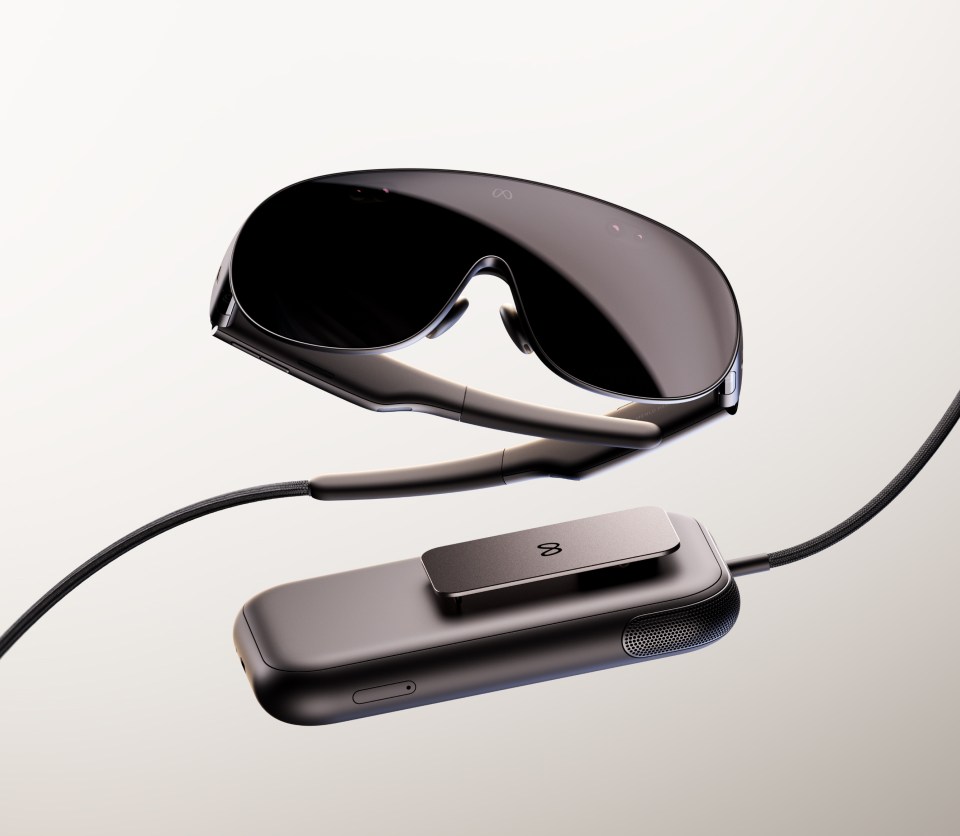
Meta describes VR Glasses as roughly 100 grams on the face. The separate puck contains the processor, battery, and storage, so that figure is not the complete system weight. The announced 5K micro-OLED display reaches 37 pixels per degree, with Dolby Vision and Dolby Atmos. The launch announcement calls the puck processor Snapdragon Reality Elite, while the developer comparison labels it XR2 Gen 3. This naming discrepancy needs confirmation; neither label is a performance benchmark. Meta claims up to three hours of high-resolution media playback; that is not a guarantee of three hours for every game or workload. Official VR Glasses announcement.
| Technical distinction | Meta VR Glasses | Quest 3 | Quest 3S |
|---|---|---|---|
| Display / optics | 5K micro-OLED; pancake | LCD; pancake | LCD; Fresnel |
| Clarity specification | 37 PPD | 25 PPD; 2064 x 2208 per eye | 20 PPD; 1832 x 1920 per eye |
| Field of view | About 70 x 66 degrees | About 110 x 96 degrees | About 96 x 90 degrees |
| Processor | External puck; chip naming differs across official sources (see note above) | Snapdragon XR2 Gen 2; 8GB RAM | Snapdragon XR2 Gen 2; 8GB RAM |
| Input / purchase caution | Eyes and hands first; Touch Plus supported but sold separately | Touch Plus controllers included; check each game’s input requirements | Touch Plus controllers included; check each game’s input requirements |
| What needs testing | Comfort with tether; launch app experience; sustained performance | Fit and preferred game experience | Lens sweet spot and text readability |
Quest display measurements come from Meta engineers’ SID display paper. Field of view, input, and software positioning come from Meta’s Connect developer recap: VR Glasses shares Quest’s operating system, store, and SDK, but its interface emphasizes eyes and hands.
Those numbers describe different parts of the viewing experience. Pixels per degree speaks to image detail in the central view; field of view describes how much of the surrounding scene is visible. A sharper central image does not automatically create a wider virtual world. A movie viewer may value the announced micro-OLED clarity and media features, while a player looking around a virtual arena may care more about peripheral visibility, controller support, and the way a particular title responds.
Meta’s Quest 3S developer introduction confirms the shared Snapdragon XR2 Gen 2 processor and 8GB RAM in Quest 3 and 3S, their included Touch Plus controllers, and the Quest 3S field of view. Paying more for Quest 3 primarily changes the optical experience rather than the processor generation.
A shared operating system, store, and SDK does not establish identical title experiences, identical interfaces, or identical performance across Quest and VR Glasses. Check the games you actually play instead of assuming that store compatibility means feature parity.
There is a practical buying distinction as well. Quest 3 and Quest 3S are available hardware for someone who wants VR gaming now. VR Glasses are a Spring 2027 planned product, and their comfort with the tether, launch software, sustained performance, and replacement value remain untested. Someone willing to wait for a lighter-on-face viewing system is making a different decision from someone who wants an available headset with established purchase options.
Camera-free Audio versus Gen 3: what you lose matters
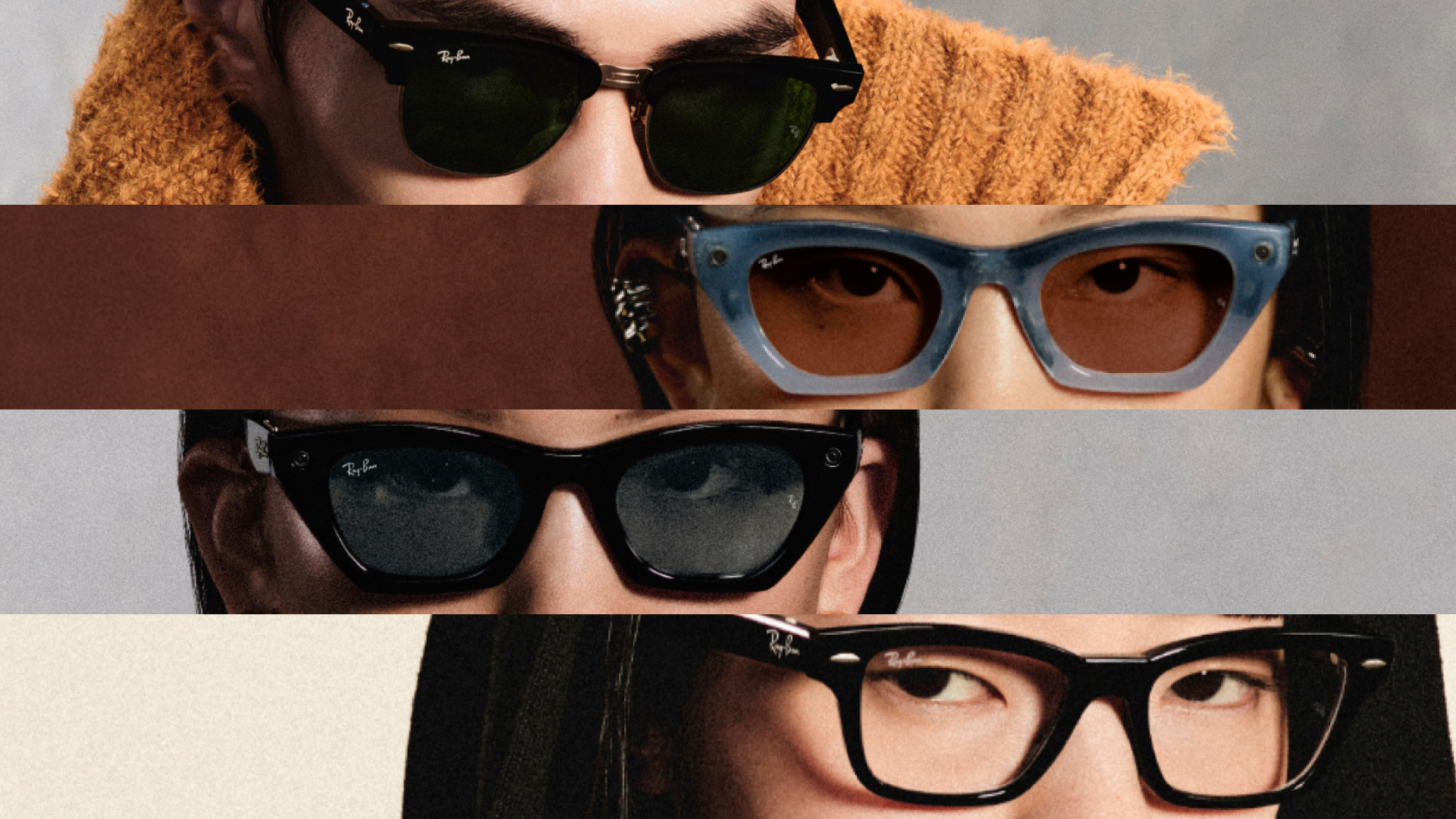
Ray-Ban Meta Audio is the deliberately narrower product. It weighs 43 grams and is rated for up to 12 hours per charge, with up to 48 additional hours from its case. Its preorder status matters: Oct. 13 shipping is planned, so it should not be described as hardware already shipping on September 26.
Ray-Ban’s official comparison lists no camera on Audio and no camera-dependent multimodal or Live AI. Audio still has six microphones, so camera-free does not mean microphone-free. It also does not automatically make the product acceptable in every workplace or public setting. Compatible phone and app requirements, workplace rules, and regional AI availability remain relevant.
Ray-Ban Meta Gen 3 takes the opposite approach on capture. It has a 12MP camera, 3K video, six microphones, and a battery rating of up to nine hours per charge. The extra capability is not a visual display: both products remain unsuitable for reading a map or watching a film through the frames.
Choose Audio when listening, calls, and voice requests are the point and you would intentionally leave photography unused. Choose Gen 3 when hands-free capture is a central reason to buy. The $100 starting-price difference only has a clear purpose if the camera and its related features will actually be part of your routine. For a camera-free buyer, paying for capture that will remain unused is not an upgrade in any meaningful use case.
Display and Oakley: different reasons to spend more
Meta Ray-Ban Display adds a small visual interface to ordinary-looking glasses rather than creating a wraparound VR scene. The Neural Band is included with the starting-price package. Meta rates the glasses at up to six hours of mixed use and up to 30 hours total including the case. Those figures describe a different product category from VR Glasses: Display is intended for glanceable information, not an immersive cinema or Quest-style virtual environment. Display hardware and battery details.
The September Display announcement concerns software and availability updates, not a newly announced second-generation Display headset. Cycling and transit directions are rolling out, while other capabilities have later or early-access schedules. A demonstrated function should not be treated as immediately available to every owner. Check the rollout status in your region before buying for a specific capability. Display rollout details.
Oakley divides its screen-free glasses by shape, protection, camera placement, and integrations rather than by visual output. HSTN offers up to eight hours of typical use, 3K recording, and IPX4 water resistance. Its $399 entry price applies to the collection, not its pricier limited edition.
Vanguard raises the protection rating to IP67 and uses a centered 12MP camera. It adds Garmin and Strava integrations and claims up to nine hours of mixed use or six hours of continuous music. Neither Oakley model has a screen, so fitness data is not presented as a built-in visual HUD. A higher price can buy protection, recording characteristics, or integrations without turning either model into a display product.
For sports use, compare the conditions in which you will wear the glasses, the importance of the camera position, and whether Garmin or Strava support fits your existing training setup. For ordinary capture, HSTN may make more sense when its lower starting price and IPX4 rating are sufficient. For visible directions or prompts, Display belongs on the shortlist; for movies and virtual screens, only the VR category addresses that need.
Which Meta glasses or Quest should you shortlist?
- Voice and audio without a camera: Ray-Ban Meta Audio, if its planned Oct. 13 shipping date works for you and its phone, app, AI, and workplace requirements fit your situation.
- Everyday photo and video: Compare Ray-Ban Meta Gen 3 with the exact Meta Glasses frame and case bundle. Do not confuse the announced $249 Adventurer option with every frame already on sale.
- Sports capture: Choose between HSTN’s lower starting price and Vanguard’s IP67 protection, centered camera, and fitness integrations.
- Small visual prompts: Meta Ray-Ban Display, after checking which software functions have reached your account and region.
- VR gaming now: Compare the Quest 3S price with Quest 3’s display and optics upgrade, then check controller and game requirements.
- Movies and virtual screens with less weight on the face: Keep Meta VR Glasses on the watchlist, but wait for independent testing of the shipping product and its tethered system.
Battery figures should not be ranked as though they came from one shared test. Audio listening, mixed-use smart glasses, continuous music, and high-resolution VR media playback are different workloads. “Up to” figures describe ceilings under stated conditions, not guaranteed daily endurance, and the VR Glasses claim applies specifically to high-resolution media playback.
Total cost deserves the same caution. Lenses may be extra; Touch Plus controllers are separate for VR Glasses but included with Quest 3 and 3S. Subscriptions or paid content can also affect value. Choose the central function you will use: camera-free listening, hands-free capture, sports recording, visual prompts, VR gaming, or immersive media.