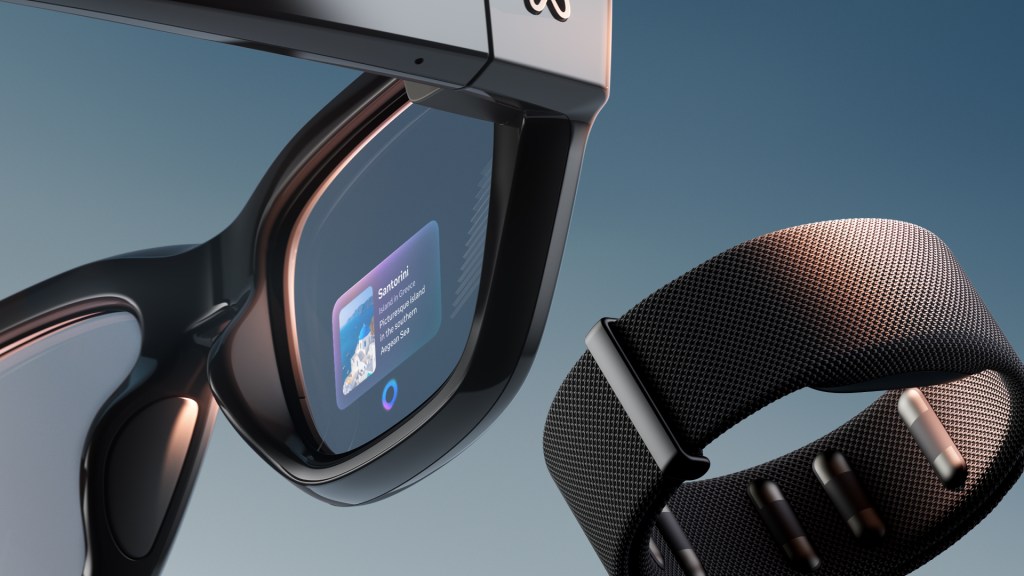


Xiaomi AI Glasses are one of the clearest signs that camera-based AI glasses are no longer only Meta’s territory. They look like normal smart eyewear, they do not include a display, and they aim at the same everyday lane as Ray-Ban Meta: hands-free photos, first-person video, voice assistance, open-ear audio, translation, quick answers, and lightweight capture.
For U.S. readers, though, the important story is not simply that Xiaomi built a cheaper Ray-Ban Meta alternative. The real story is that Xiaomi built a powerful China-first smart-glasses package around its own phone, assistant, payment, and smart-home ecosystem. That makes the product fascinating, but it also means American buyers should treat it as a watchlist device rather than an easy import purchase.
What Xiaomi AI Glasses are
Xiaomi AI Glasses launched in China in June 2025 as Xiaomi’s first major entry into AI eyewear. They are not AR display glasses like XREAL, VITURE, RayNeo, or Rokid AR Spatial. They are screenless smart glasses built around a camera, microphones, speakers, phone pairing, Xiao AI, and Xiaomi’s broader ecosystem.
That matters because the buying question is different. Display glasses are about watching, gaming, and turning a phone, laptop, handheld, or console into a private big screen. Xiaomi AI Glasses are about capturing and asking. You wear them because you want a hands-free camera, a voice assistant, translation help, quick object recognition, or a light way to interact with services while walking around.
Price and availability
At launch, China pricing started at CNY 1,999 for the standard model, with electrochromic versions reported at CNY 2,699 and CNY 2,999. That roughly places the line around the high-$200 to low-$400 range before taxes, import costs, exchange-rate movement, and reseller markup. The U.S. caveat is simple: Xiaomi has not made these a normal mainstream U.S. retail product.
So the price looks aggressive on paper, especially compared with Ray-Ban Meta. But a U.S. buyer should not compare only the sticker price. Warranty support, app availability, language support, Xiaomi account region behavior, payment features, smart-home integrations, and replacement lenses all matter more than a converted yuan price.
The core specs that matter
- Product type: screenless AI camera glasses, not AR display glasses.
- Launch market: China-first, with global availability still the key open question for U.S. readers.
- Processor: Qualcomm Snapdragon AR1-class smart-glasses silicon, reported with Xiaomi’s low-power system architecture.
- Camera: 12MP Sony IMX681 first-person camera, with reports listing 2K video recording at 30fps and electronic image stabilization.
- Audio: dual open-ear speakers for calls, assistant responses, and media listening.
- Microphones: five-mic array with bone-conduction and wind-noise handling for voice pickup.
- Battery: 263mAh battery, with Xiaomi-reported typical-use figures around 8.6 hours in launch coverage.
- Charging: USB-C charging, with fast top-up claims reported by launch outlets.
- Lenses: standard and electrochromic lens options, with tint switching on higher-priced versions.
- Durability: IP54 dust and splash resistance reported in launch coverage.
- Smart features: Xiao AI assistant, translation, object recognition, meeting notes, phone camera collaboration, and Xiaomi ecosystem controls.
Why the camera spec gets attention
The 12MP Sony IMX681 camera is the headline hardware spec because it puts Xiaomi directly into the same practical conversation as Ray-Ban Meta and other camera glasses. The appeal is not cinematic quality. The appeal is that a user can capture a point-of-view clip without pulling out a phone, starting a gimbal, or changing the moment.
That can be useful for travel, pets, cooking, cycling, family clips, hands-on tutorials, and quick memory capture. It also creates the same social question every camera-glasses product faces: people around you need to understand when recording is happening. Launch coverage notes a privacy indicator during capture, but buyers still need to use the camera respectfully.
Why Xiaomi’s ecosystem is the advantage
Xiaomi’s strongest card is not only hardware. It is ecosystem. The glasses are designed to connect with Xiaomi phones, Xiao AI, Xiaomi’s app layer, smart-home controls, and China-focused services. In the right region, that can make the glasses feel less like a separate gadget and more like a face-worn extension of the phone.
That is the part Ray-Ban Meta should watch carefully. Meta has the stronger U.S. consumer story, social sharing, and brand partnership with Ray-Ban. Xiaomi has the ability to wire glasses into phones, smart homes, payments, assistant workflows, and device controls at aggressive hardware prices. If Xiaomi ever brings the experience west in a polished way, the category gets more competitive fast.
The U.S. buyer problem
The same ecosystem advantage becomes the biggest U.S. caveat. Features such as Xiao AI, payment workflows, local app services, and smart-home shortcuts are most valuable when the regional software stack supports them. If you import the glasses without full local support, you may end up with an impressive camera headset that cannot use its best tricks.
That is why I would not frame Xiaomi AI Glasses as a simple U.S. recommendation yet. They are a serious product and an important competitor, but a U.S. buyer should wait for clear global availability, English-language support details, app-store behavior, warranty paths, and real imported-user reports before treating them like an easy Ray-Ban Meta substitute.
Xiaomi AI Glasses vs Ray-Ban Meta
Ray-Ban Meta remains the safer U.S. pick because it is built around a known eyewear brand, a mature app experience, Meta AI, social capture, and normal U.S. retail support. It is the easier answer if you want smart glasses today and do not want to manage region limitations.
Xiaomi AI Glasses look more aggressive on specs and China pricing. The camera, battery claims, electrochromic lens options, and ecosystem depth make them extremely interesting. But the question is not only which spec sheet wins. The question is which product works better where you actually live.
Xiaomi AI Glasses vs Solos AirGo V2
Solos AirGo V2 is closer to the Western open-AI assistant lane. It emphasizes camera AI, multilingual support, and a lighter phone-companion experience. Xiaomi is more vertically integrated and more China-service dependent. If you want a broad assistant concept in the U.S., Solos may be easier to evaluate. If you want the most aggressive ecosystem hardware story, Xiaomi is the more interesting watch.
Xiaomi AI Glasses vs Rokid AI Glasses Style
Rokid AI Glasses Style and Xiaomi AI Glasses both show how fast Chinese wearable AI brands are moving. Rokid’s story is more about open AI models, lightweight design, and global positioning. Xiaomi’s story is broader platform power: phones, operating systems, smart home, assistant services, retail scale, and price pressure.
For readers tracking the future of smart glasses, this is the important split. Some companies are building AI glasses as standalone assistants. Xiaomi is building them as another endpoint in a full device ecosystem.
Xiaomi AI Glasses vs display glasses
Do not buy Xiaomi AI Glasses if your goal is a huge virtual screen. They do not replace XREAL One Pro, VITURE Beast, RayNeo Air 4 Pro, or Rokid AR Spatial. They do not give you a private cinema, Steam Deck screen, laptop monitor, or multi-window workspace.
Buy display glasses when you want to look at content. Watch Xiaomi AI Glasses when you want wearable AI capture and voice interaction. They are adjacent categories, not direct substitutes.
Who should watch Xiaomi AI Glasses
- Ray-Ban Meta shoppers who want to understand where competition is heading.
- Xiaomi phone users who may benefit most if regional support expands.
- Wearable AI watchers tracking camera glasses, translation, and voice assistants.
- Travel and POV creators interested in hands-free recording but willing to wait for real-world reviews.
- Smart-home users curious about face-worn controls inside a broader device ecosystem.
Who should skip them for now
- Most U.S. buyers who need normal warranty, retail, app, and support channels today.
- VR and gaming buyers who should look at Meta Quest or AR display glasses instead.
- Privacy-sensitive buyers uncomfortable with camera glasses in public or social spaces.
- People outside Xiaomi’s ecosystem who may lose much of the product’s intended value.
- Buyers who need English-first AI reliability before committing money.
Bottom line
Xiaomi AI Glasses are not just another smart-glasses rumor. They are a real signal that the Ray-Ban Meta category is becoming crowded, price-competitive, and ecosystem-driven. The hardware story is strong: 12MP camera, Snapdragon AR1-class silicon, open-ear audio, five microphones, electrochromic lens options, and long typical-use battery claims.
The buying story is more complicated. For China-based Xiaomi users, these glasses may already make practical sense. For U.S. readers, they are best treated as an important benchmark and a product to monitor. If Xiaomi solves global availability, app support, language support, and service localization, this could become one of the most important Ray-Ban Meta challengers. Until then, the smart move is to watch closely rather than rush into an import.
Continue Reading
If this guide helped, these related smart glasses articles are the best next stops.
- Ray-Ban Meta vs Oakley Meta vs XREAL vs Vuzix: Smart Glasses Types ExplainedA smart glasses type guide that explains the difference between AI camera glasses, sports glasses…
- Ray-Ban Meta Gen 2 Guide: Why These AI Glasses Are the Smart Glasses BaselineA U.S.-focused Ray-Ban Meta Gen 2 guide covering price, 3K video, battery life, Meta AI, daily…
- Oakley Meta Vanguard Guide: Sports AI Glasses Built for Training, POV Video, and StravaA U.S.-focused Oakley Meta Vanguard guide covering the $499 price, 12MP ultra-wide camera, 3K…
- Oakley Meta HSTN Guide: The Everyday Oakley Smart Glasses Between Ray-Ban and VanguardA U.S.-focused Oakley Meta HSTN guide covering the $399 starting price, limited edition $499…