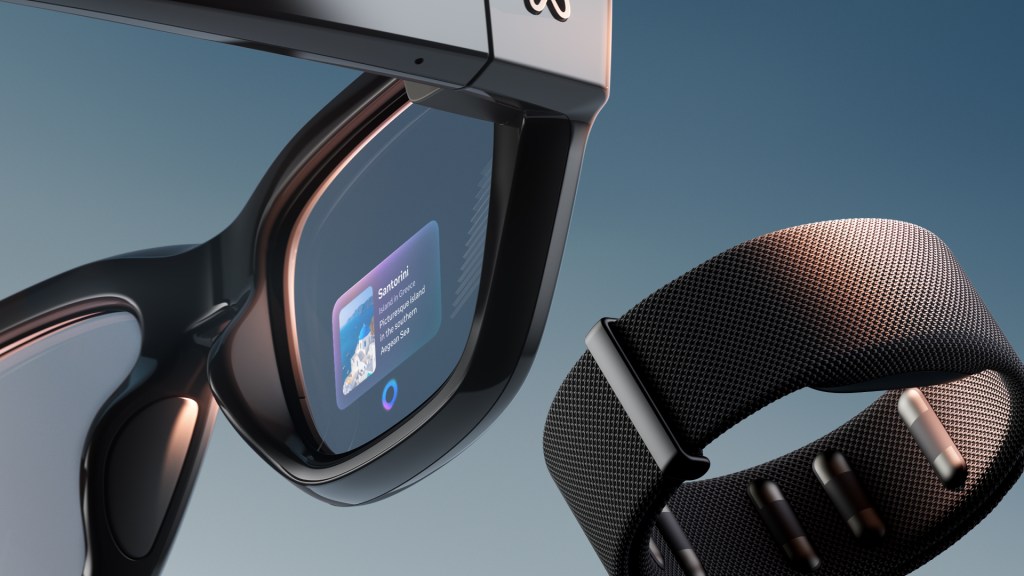
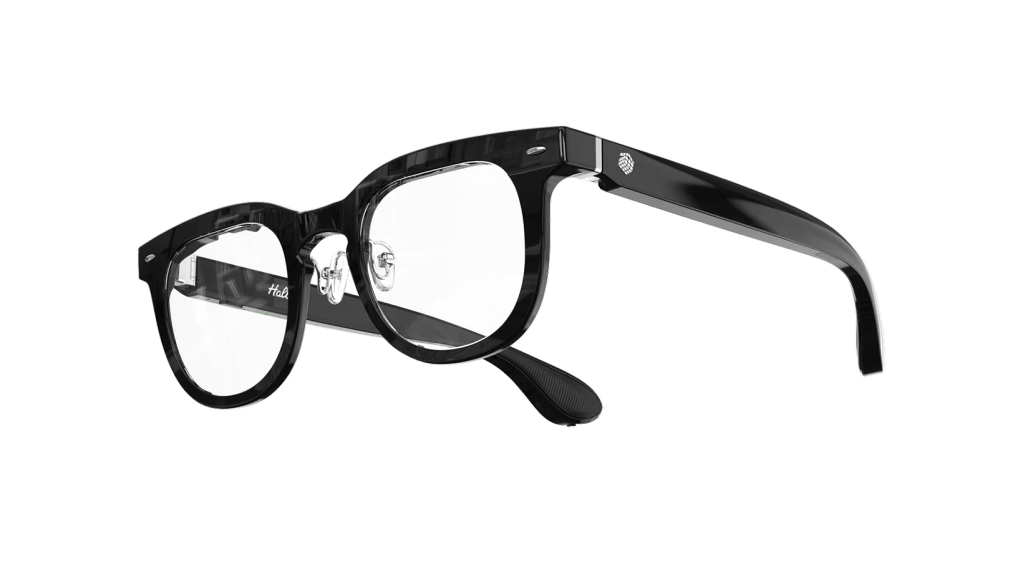
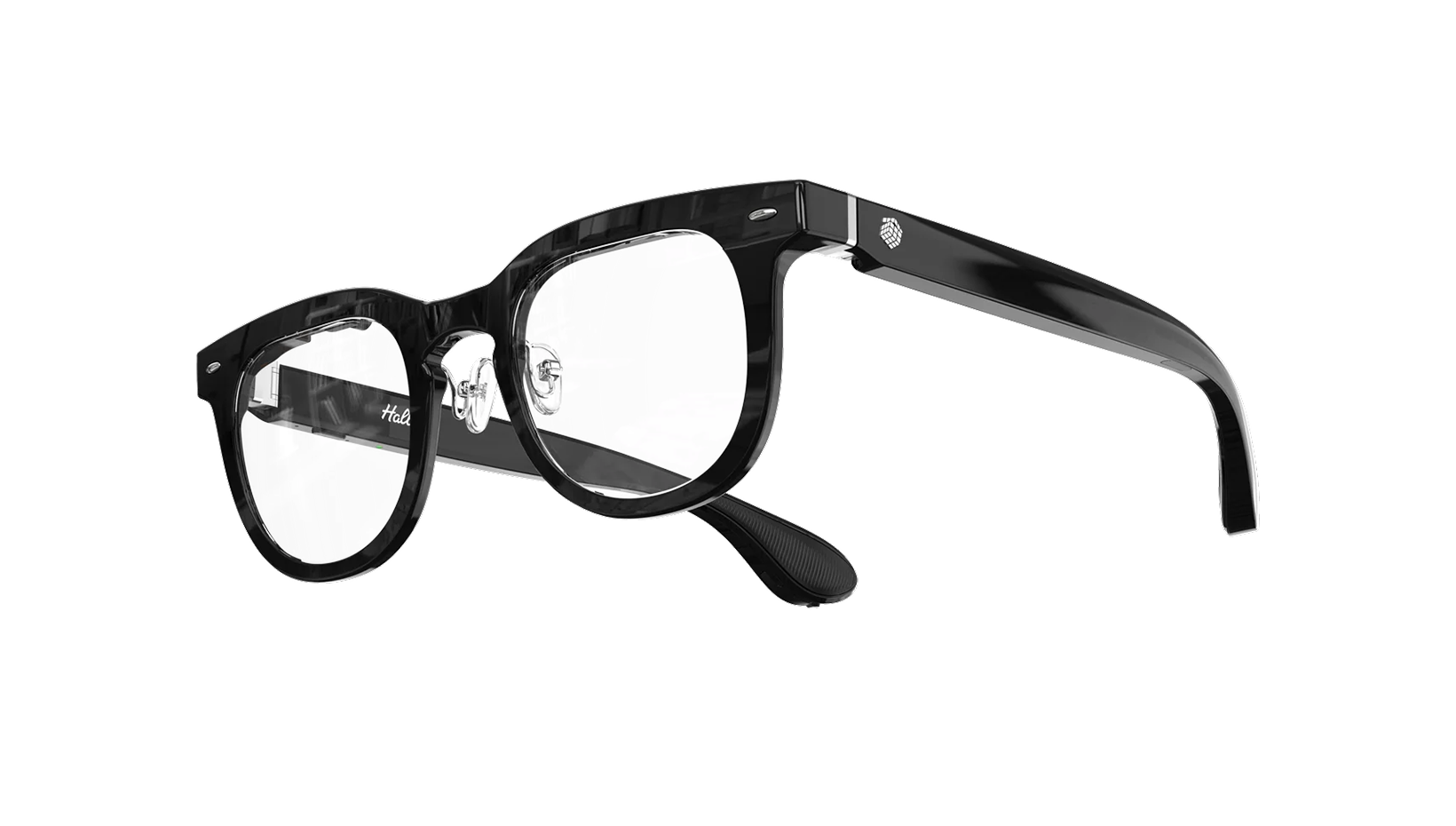
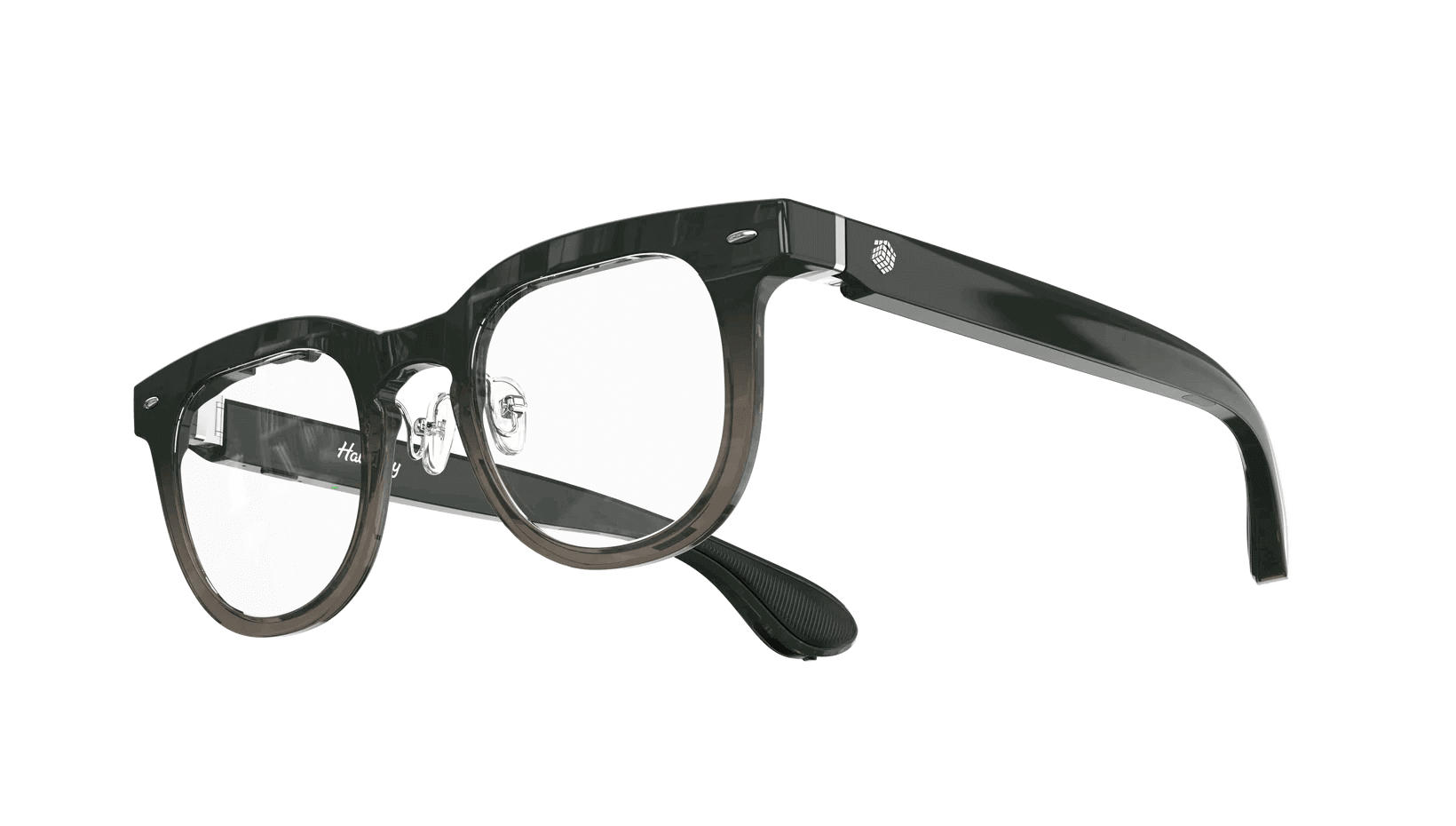
Halliday DigiWindow Glasses are the smart glasses that sit between two very different ideas. They are not camera glasses like Ray-Ban Meta. They are not private cinema glasses like XREAL, VITURE, RayNeo, or Rokid AR Spatial. They are closer to Even Realities G2: a small personal display for prompts, translation, reminders, and AI assistance. But Halliday takes a more hidden approach by putting the display module in the frame rather than making the lens look obviously technological.
That makes Halliday interesting and risky at the same time. The idea is elegant: a discreet display, a light frame, proactive AI, and a smart ring for quiet control. The hard question is whether the software, audio, display size, and daily reliability are good enough to justify a $499 purchase in 2026.
What Halliday DigiWindow Glasses are
Halliday DigiWindow Glasses are AI smart glasses with a tiny hidden near-eye display. Halliday’s official store currently lists the base glasses at $499, with prescription and progressive lens variants costing more. The product page promotes a 28.5-gram frame measured without lenses, up to 12 hours of battery life, free prescription lens options in some bundles, proactive AI, reactive AI, AI translation, cheatsheet, audio memo, notifications, music, phone calls, temple controls, app setup, and a smart control ring.
Earlier CES 2025 coverage from The Verge described Halliday’s display as a DigiWindow module that appears like a small 3.5-inch screen in the upper-right of the user’s view. That makes Halliday different from screenless AI glasses and different from full-lens display glasses. It gives you glanceable information without turning the entire lens into a screen.
The core specs that matter
- Current official base price: $499 on Halliday’s product page at the time checked.
- Weight claim: 28.5 grams measured without lenses according to Halliday’s current page.
- Display: DigiWindow hidden near-eye display; CES coverage described it as a 3.5-inch-equivalent view.
- Battery claim: up to 12 hours on Halliday’s current product page.
- Controls: temple touch controls, action button, Halliday app, voice, and smart control ring.
- AI features: proactive AI, reactive AI, AI translation, cheatsheet, audio memo, reminders, notifications, music, and phone calls.
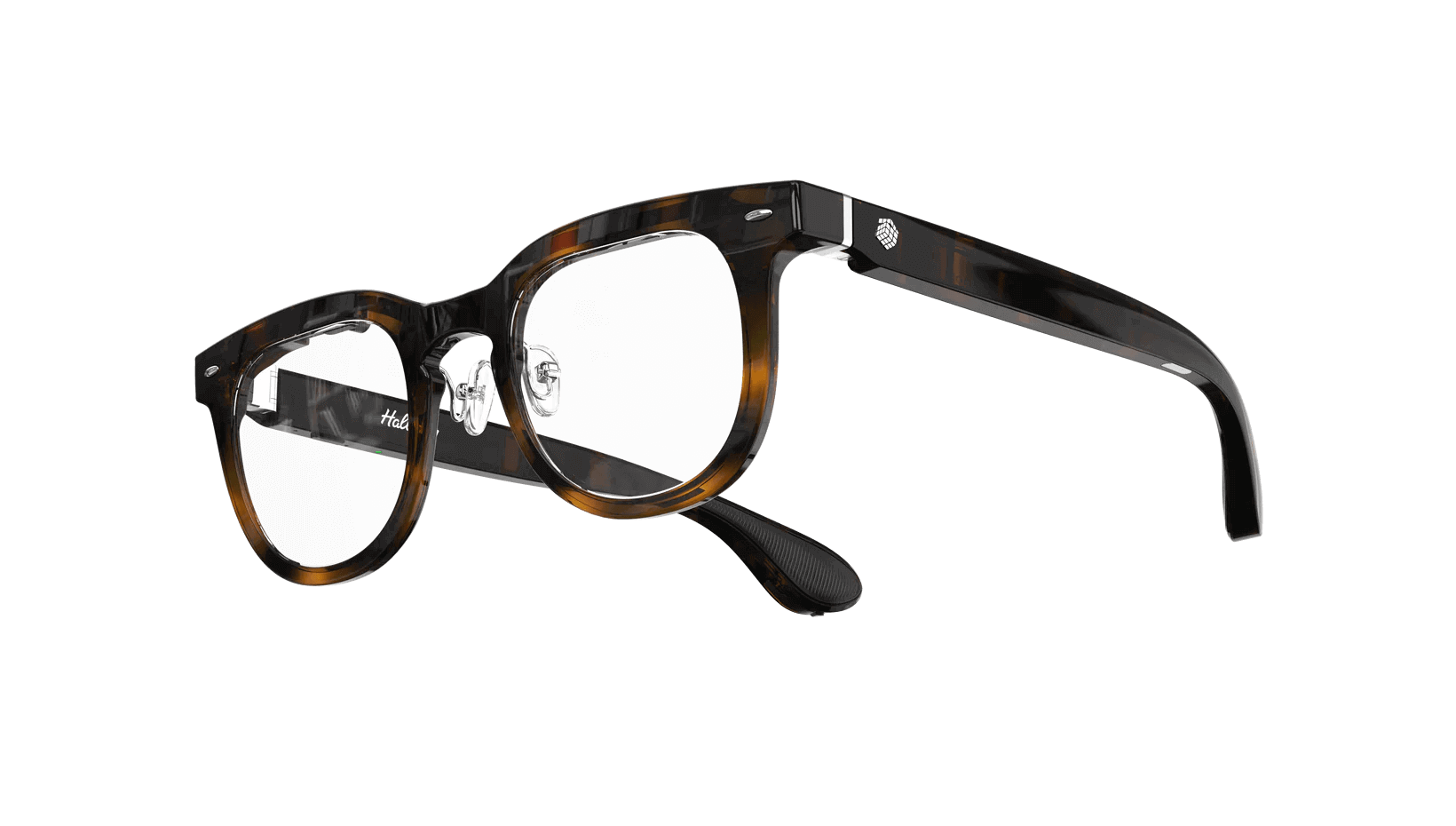
- Lens support: prescription, progressive, photochromic, black, gradient, and tortoise-style options listed in product variants.
- Credit model: Halliday’s page mentions free credits for advanced features and additional credits sold in-app.
The credit model deserves attention. Halliday’s feature page says some advanced uses consume credits, including proactive AI, advanced translation, and audio memo. That does not make the product bad, but it means buyers should not judge it only by the hardware price. If you plan to use AI features heavily, ongoing credit costs may matter.
DigiWindow is the reason Halliday exists
DigiWindow is Halliday’s main differentiator. Instead of making the lens itself show a large screen, Halliday hides a tiny display module in the frame and places information into a small area of your view. The promise is that only you see the display, while people around you see normal-looking glasses.
That is an appealing design decision for people who do not want camera glasses and do not want bulky display glasses. The tradeoff is obvious: the display is small. It can be useful for prompts, translations, reminders, cheat sheets, and short notes. It is not the product for movies, games, spreadsheets, or large-screen work.
What proactive AI means in practice
Halliday markets proactive AI as a major feature. The idea is that the glasses can listen to context and offer relevant information before you explicitly ask for it. In a meeting, that might mean pulling up a reminder. During a conversation, it might mean surfacing a quick fact. During travel, it might mean translation or schedule support.
The concept is strong, but it requires trust. Proactive AI needs accurate transcription, useful timing, fast responses, and a clean interface. If it is late, shallow, or distracting, it becomes noise. TechRadar’s later hands-on criticism is important here: the site liked the concept less in practice, calling out slow software, weak audio, a small outdated-feeling display, and limited usefulness compared with alternatives. Buyers should treat Halliday as promising but not automatically proven.
The ring control is more important than it sounds
Halliday includes or promotes a smart control ring because smart glasses need subtle controls. Voice is not always appropriate. Touching the frame can look awkward. Pulling out a phone defeats the purpose. A ring lets the user tap, swipe, and click through information more discreetly.
This is similar to Even Realities G2 and its optional R1 ring. The more a smart-glasses product depends on small visual prompts, the more important quiet navigation becomes. Halliday’s ring is not just an accessory. It is part of the product’s core interaction idea.
Who should consider Halliday DigiWindow Glasses
- People who want a hidden display but do not want large AR display glasses.
- Meeting-heavy professionals who like cheat sheets, reminders, and short prompts.
- Travelers and language learners who want translation without staring at a phone.
- Buyers who dislike cameras on glasses and want a more socially discreet wearable.
- Early adopters who are comfortable with a product that may improve through software updates.
Who should skip it
- Movie and gaming buyers should look at XREAL, VITURE, RayNeo, or Rokid AR Spatial instead.
- Camera buyers should consider Ray-Ban Meta, Oakley Meta, Solos AirGo V2, or Rokid Style.
- Budget shoppers should think carefully before paying $499 plus possible lens or credit costs.
- People who need mature software now should read current reviews before ordering.
- VR users should buy Meta Quest for immersive apps and games.
Halliday vs Even Realities G2
Even G2 is Halliday’s closest conceptual rival in this series. Both focus on useful information rather than camera capture or large-screen entertainment. Even G2 is more expensive at $599, but it feels more work-oriented with Conversate, Teleprompt, translation, notifications, prescription support, and a camera-free design. Halliday is cheaper at $499 and emphasizes the hidden DigiWindow module, proactive AI, and a lighter frame.
The buying rule is simple. Choose Even G2 if you want the more polished professional-display concept and are comfortable paying more. Choose Halliday if the hidden display, lighter frame, and lower starting price are more appealing, but check recent software impressions first.
Halliday vs Ray-Ban Meta
Ray-Ban Meta has no display, but it has a much stronger camera, social capture, audio, and app ecosystem story. Halliday has the display, but no camera-first capture identity. These products solve different problems. Meta is for seeing and sharing. Halliday is for quietly reading and being prompted.
If your smart glasses dream is taking hands-free photos and videos, Ray-Ban Meta is the safer choice. If your dream is seeing a translation line, reminder, or short note without pulling out your phone, Halliday is the more relevant product.
Halliday vs display glasses
XREAL, VITURE, RayNeo, and Rokid AR Spatial are wearable screens. Halliday is a glanceable assistant. That difference is enormous. A Steam Deck game, Netflix movie, or laptop desktop belongs on display glasses. A meeting cue, translation, or private note belongs on Halliday.
For PlayTechDeep readers, Halliday should not be judged as a Quest replacement or XREAL competitor. It is a different branch of smart glasses: small display, everyday AI, low visual footprint.
Bottom line
Halliday DigiWindow Glasses are one of the more intriguing smart glasses because the idea is clean: a tiny hidden display, proactive AI, ring control, light frame, and no obvious camera-glasses social problem. The concept is stronger than the average AI wearable pitch.
The caution is execution. At $499, Halliday needs the display, AI, audio, battery, app, and credit model to feel reliable in everyday life. If it does, it could be a practical alternative to Even G2. If it does not, Ray-Ban Meta, Rokid Style, or simpler display glasses may be easier to recommend.
Continue Reading
For a broader comparison, these related smart glasses articles are the best next stops.
- Ray-Ban Meta vs Oakley Meta vs XREAL vs Vuzix: Smart Glasses Types ExplainedA smart glasses type guide that explains the difference between AI camera glasses, sports glasses…
- Vuzix Z100 Guide: The 38-Gram Smart Glasses Built for Quiet Workflows, Not HypeA U.S.-focused Vuzix Z100 guide covering price, 38g design, 48-hour battery claim, monochrome…
- Even Realities G2 Guide: The Camera-Free Smart Glasses for Focus, Translation, and Quiet AIA U.S.-focused Even Realities G2 guide covering the $599 price, 36g camera-free design, Micro-LED…
- Mentra Live Guide: The Open-Source Smart Glasses Built for Apps, Streaming, and Field WorkA U.S.-focused Mentra Live guide covering price, MentraOS, MiniApp Store, HD camera…
Sources
- Halliday: DigiWindow Glasses official product page
- Halliday: DigiWindow Glasses feature page
- The Verge: Halliday smart glasses CES report
- TechRadar: Halliday smart glasses critical review context
- Forbes: Halliday AI glasses hands-on context
- TechInsights: Halliday AI Smart Glasses GP101 teardown summary