Solos AirGo V2 is the smart glasses article for readers who want camera-enabled AI without paying Ray-Ban Meta prices or waiting for a full AR display future. It is not a wearable cinema like XREAL, VITURE, RayNeo, or Rokid AR Spatial. It is not a hidden-display prompt system like Halliday or Even G2. It is a $299 pair of camera AI glasses designed to look close to normal eyewear while giving an assistant eyes, ears, and voice.
That makes AirGo V2 a practical bridge product. It gives you a camera, open-ear audio, AI translation, object recognition, Full HD video, live stabilization, and multimodal AI support through SolosChat 3.0. The question is whether that combination is useful enough to compete with Meta’s better-known Ray-Ban line.
What Solos AirGo V2 is
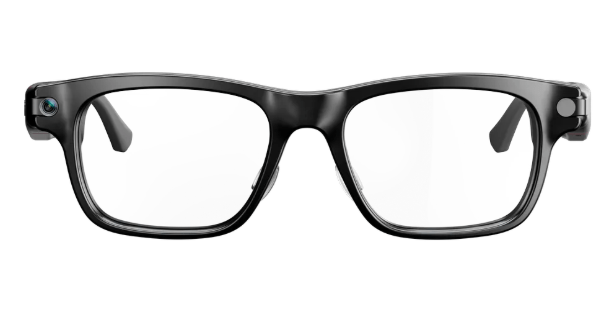
Solos AirGo V2 is a camera-enabled AI smart glasses model launched at CES 2026. Solos’ official launch posts and product page list the starting price at $299. The product adds a 16MP camera, electronic image stabilization, Full HD video, low-power Wi-Fi for live video, improved directional audio, SmartHinge modular frame design, swappable battery temples, and multimodal AI through SolosChat 3.0.
The key idea is not a screen. AirGo V2 does not show a floating display in front of your eyes. Instead, it captures what you see, listens to your questions, and connects that context to AI models. Solos says the system can use ChatGPT, Claude, Gemini, DeepSeek, and Envision-style accessibility workflows depending on feature availability and setup.
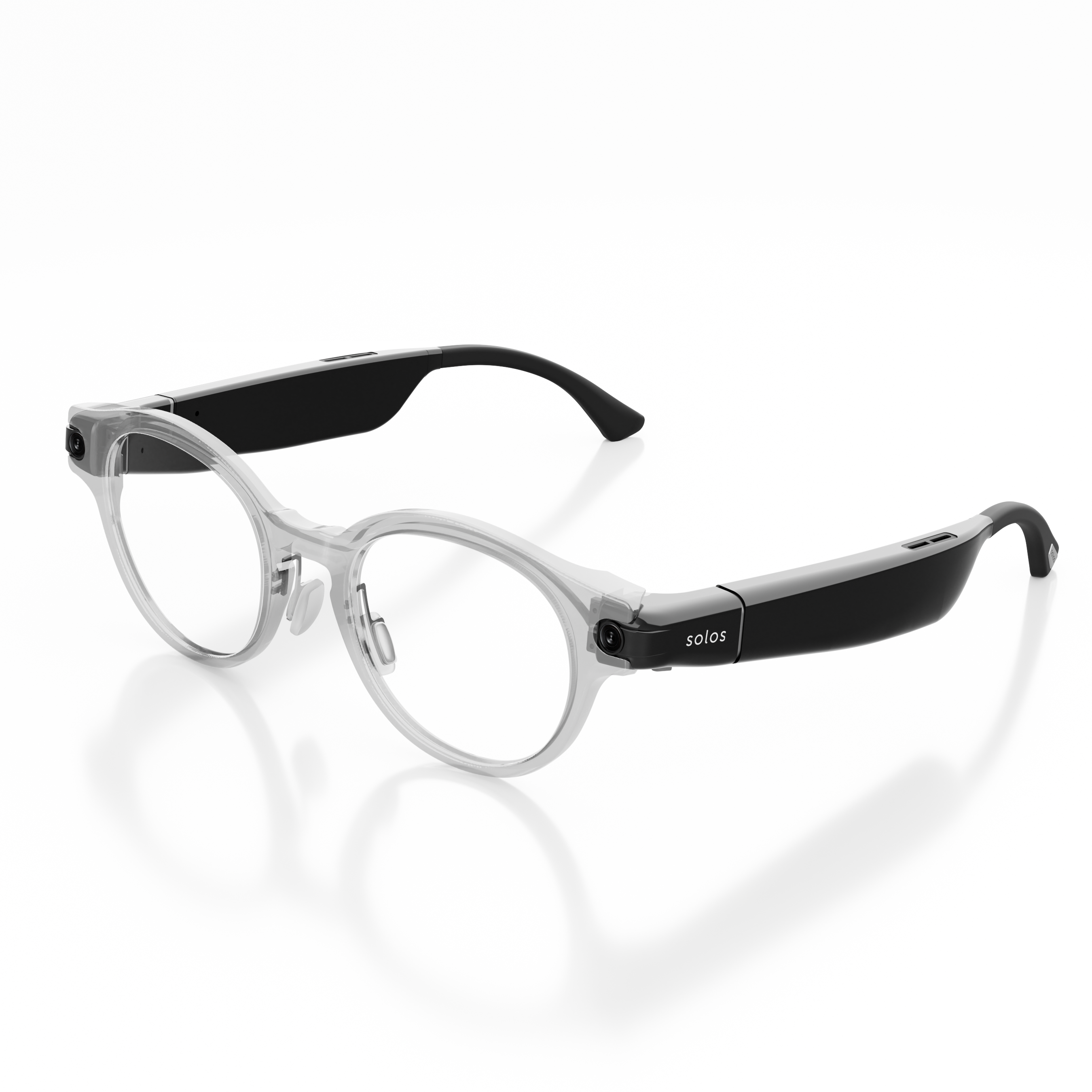
The core specs that matter
- Current official starting price: $299 on Solos’ product page and CES 2026 launch materials.
- Camera: 16MP ultra-slim camera.
- Video: Full HD video with electronic image stabilization according to Solos and launch coverage.
- AI platform: SolosChat 3.0 with multimodal image, video, audio, and text interactions.
- AI model support: Solos materials and coverage mention ChatGPT, Claude, Gemini, DeepSeek, and Envision integrations.
- Design: SmartHinge modular platform with swappable frame fronts.
- Battery concept: swappable battery temples for longer use, with a separate 1,100mAh charging case planned around Q2 2026 according to Android Central.
- Audio: improved directional open-ear audio with reduced leakage in Solos launch coverage.
- Compatibility: iOS and Android support through Solos app workflows.
The most important number is the price. At $299, AirGo V2 sits below many premium smart glasses and much lower than display-first products. That makes the product easier to try, especially for people who mostly want camera AI and translation rather than a screen.
Why the 16MP camera matters
The camera is the heart of AirGo V2. Smart glasses without a display need a strong reason to exist, and for Solos that reason is visual AI. If the glasses can identify an object, read text, translate a sign, describe a scene, or answer a question about what you are looking at, the camera becomes more than a content tool.
This is where AirGo V2 differs from Halliday and Even G2. Those glasses are about showing information to you. Solos is about letting AI see with you. That may be more useful for accessibility, field work, travel, product identification, maintenance tasks, and hands-free problem solving.
Multimodal AI is the real pitch
SolosChat 3.0 is the software layer behind the product’s pitch. Solos and multiple CES reports describe AirGo V2 as supporting multimodal interactions across image, video, audio, and text. In everyday terms, that means you can ask a question while the glasses use visual and audio context instead of treating the request as a normal voice command.
The model list matters because AI glasses are changing quickly. A product tied to only one assistant may age badly. Solos’ positioning around ChatGPT, Claude, Gemini, DeepSeek, and Envision makes the platform sound more flexible. The tradeoff is that real usefulness depends on the app, subscriptions, model access, latency, and how well Solos coordinates the experience.
SmartHinge and swappable batteries
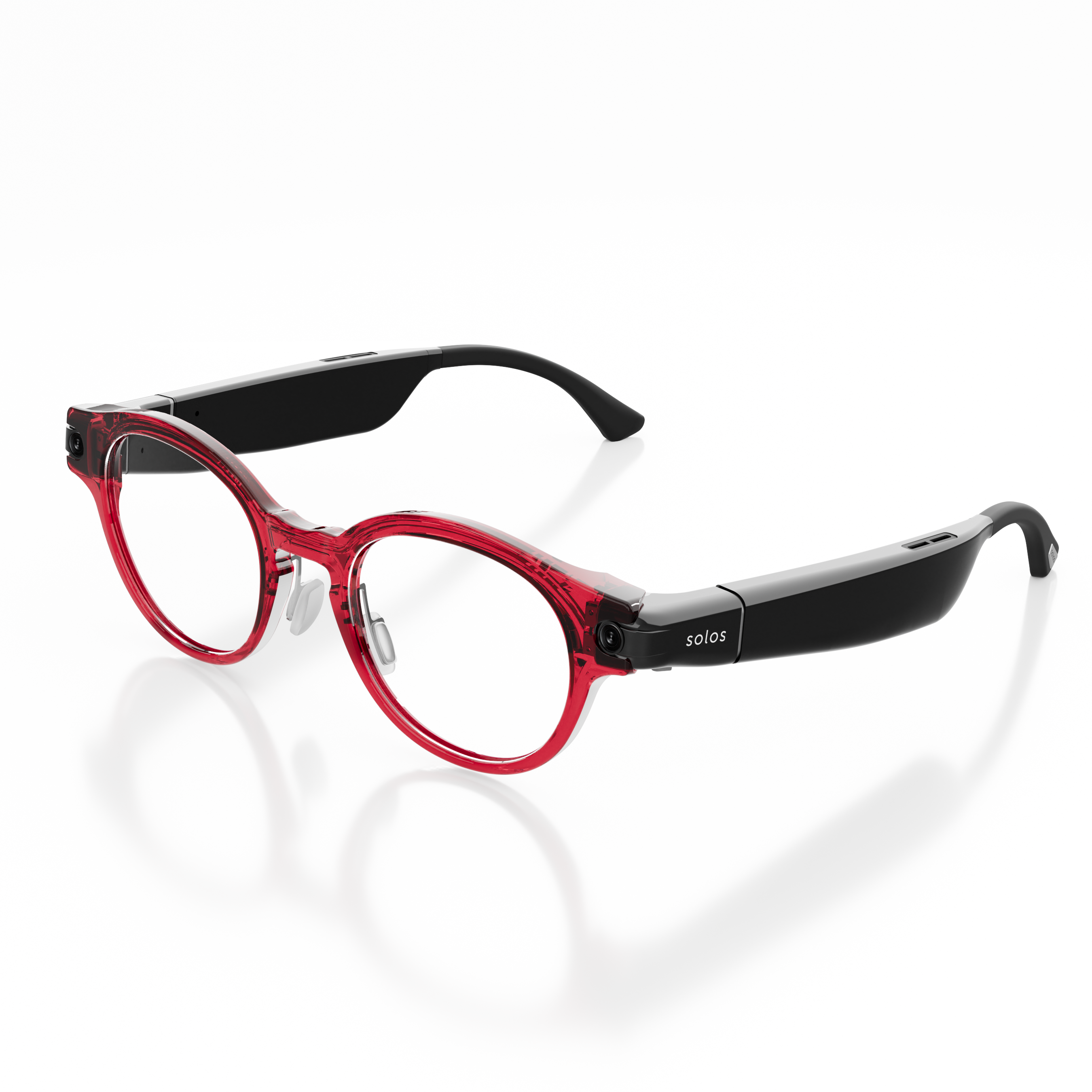
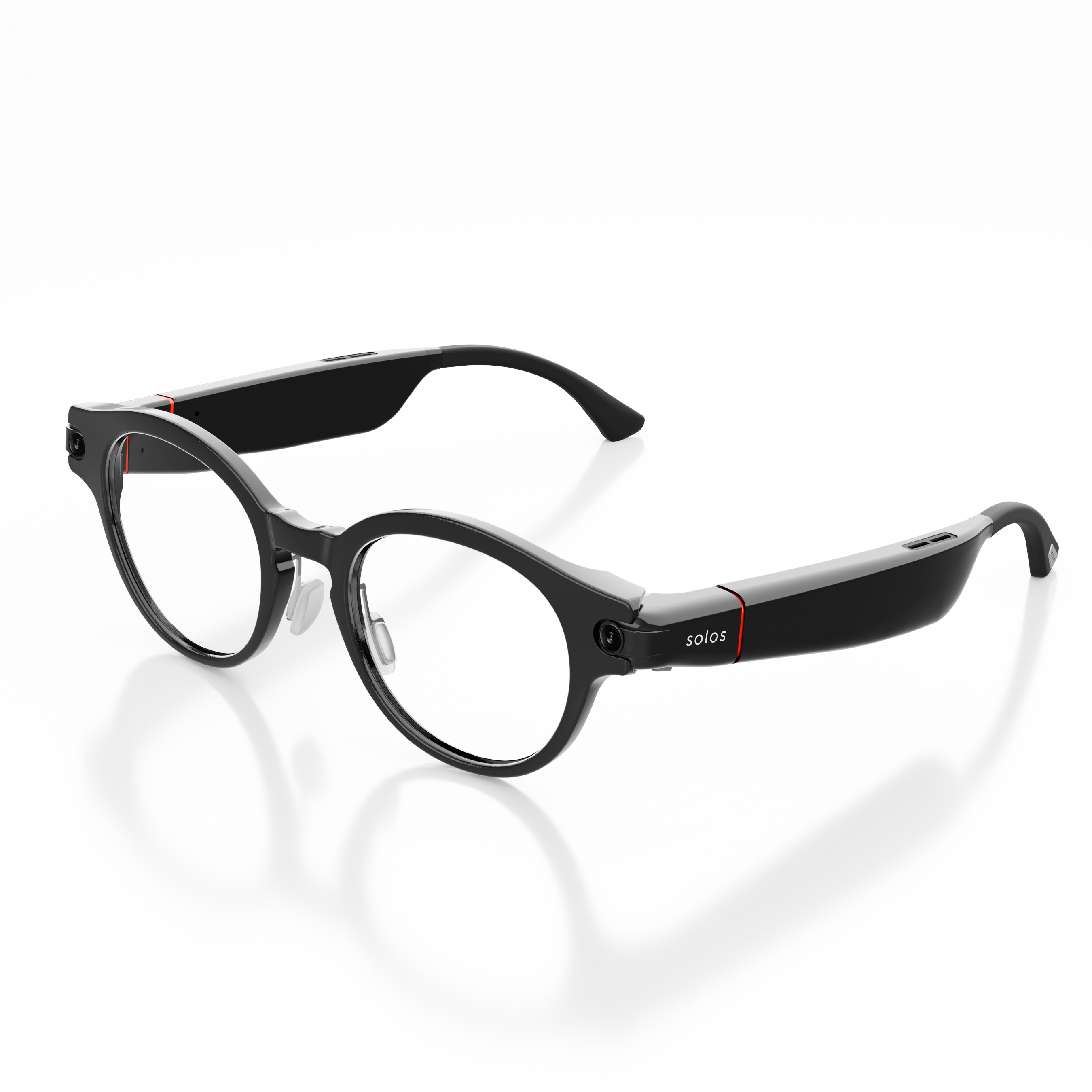
The SmartHinge design is Solos’ hardware argument. Instead of treating smart glasses as one fixed frame forever, Solos lets users swap frame fronts and battery temples. That is useful because glasses are personal. Some people want a daily optical frame, some want sunglasses, and some want a sportier style.
The swappable battery concept also solves a real problem. Smart glasses die faster than ordinary glasses, and camera AI drains power. Android Central reported that Solos’ 1,100mAh charging case is planned separately around Q2 2026, so buyers should not assume it is included with the base $299 purchase.
Who should consider Solos AirGo V2
- Ray-Ban Meta shoppers who want a cheaper camera AI alternative.
- Travelers who want text translation, object identification, and hands-free visual questions.
- Accessibility-focused users who are interested in Envision-style scene description and low-vision workflows.
- Field workers and business users who may benefit from live video, object recognition, and CRM or enterprise integrations.
- People who want modular frames instead of a single fixed smart-glasses style.
Who should skip it
- Anyone who wants a display should look at Even G2, Halliday, XREAL, VITURE, RayNeo, or Rokid AR Spatial instead.
- People who want the most polished consumer camera-glasses ecosystem should still compare Ray-Ban Meta first.
- Privacy-sensitive buyers should think carefully before wearing camera glasses in social spaces.
- VR gamers should buy Meta Quest for immersive apps and games.
- Buyers who need a charging case immediately should verify current accessory availability before purchasing.
Solos AirGo V2 vs Ray-Ban Meta
Ray-Ban Meta is the mainstream benchmark. It has a stronger fashion partner, mature social sharing, Meta AI integration, and a better-known camera glasses story. Solos AirGo V2 counters with a lower $299 starting price, modular SmartHinge design, a 16MP camera, multimodal model flexibility, and accessibility/SDK positioning.
The buying rule is simple. Choose Ray-Ban Meta if social capture, brand trust, and Meta’s polished app ecosystem matter most. Choose Solos AirGo V2 if you want a cheaper, more modular, AI-workflow-focused camera glasses platform.
Solos AirGo V2 vs Rokid Style
Rokid Style is also a camera AI glasses product, but it emphasizes open AI, a 38.5-gram display-free frame, prescription-first design, and voice-first assistance. Solos AirGo V2 emphasizes modularity, 16MP camera capture, stabilized Full HD video, live streaming, and its SolosChat 3.0 ecosystem.
Rokid may appeal more to people who want a lighter, simpler AI glasses product. Solos may appeal more to people who care about video, modular frames, and enterprise or accessibility integrations.
Solos AirGo V2 vs display glasses
XREAL, VITURE, RayNeo, and Rokid AR Spatial are about seeing a bigger screen. Solos AirGo V2 is about letting AI understand the world around you. That difference is decisive. A movie belongs on display glasses. A question about a sign, object, menu, or live scene belongs on Solos.
For PlayTechDeep readers, AirGo V2 should not be treated as a Quest or XREAL competitor. It is a camera AI wearable, not a VR headset or private monitor.
Bottom line
Solos AirGo V2 is one of the more practical $299 smart glasses launches because it does not pretend to be full AR. It focuses on camera AI, multimodal help, translation, object recognition, live video, modular frames, and a price that makes experimentation easier.
The main question is execution. If SolosChat 3.0, model access, battery workflow, and camera quality feel smooth, AirGo V2 could be a strong Ray-Ban Meta alternative. If the software feels fragmented, Meta’s ecosystem may still be the safer buy. Either way, Solos deserves a place in the smart glasses series because it shows how fast camera AI glasses are becoming their own lane.
Continue Reading
If this guide helped, these related smart glasses articles are the best next stops.
- Ray-Ban Meta vs Oakley Meta vs XREAL vs Vuzix: Smart Glasses Types ExplainedA smart glasses type guide that explains the difference between AI camera glasses, sports glasses…
- Ray-Ban Meta Gen 2 Guide: Why These AI Glasses Are the Smart Glasses BaselineA U.S.-focused Ray-Ban Meta Gen 2 guide covering price, 3K video, battery life, Meta AI, daily…
- Oakley Meta Vanguard Guide: Sports AI Glasses Built for Training, POV Video, and StravaA U.S.-focused Oakley Meta Vanguard guide covering the $499 price, 12MP ultra-wide camera, 3K…
- Oakley Meta HSTN Guide: The Everyday Oakley Smart Glasses Between Ray-Ban and VanguardA U.S.-focused Oakley Meta HSTN guide covering the $399 starting price, limited edition $499…