A Solo Survival Choice
The developer’s Steam listing describes the original Into the Radius as a single-player survival game built around scavenging, firearms, artifacts, and anomalies. Those systems make it a natural fit for buyers who want an isolated solo experience.
Choose it with that intent in mind if social play is not your priority. Keep the original game distinct from its sequel, and do not assume details from the Steam edition, including its price or release timing, apply to the Quest edition.
The first reason Into the Radius still works is not the gunplay. It is the quiet before the gunplay. You stand in a gray, ruined place with a backpack that suddenly feels too small, a pistol that suddenly feels too real, and a route plan that starts falling apart the moment the Radius reminds you it does not care about your confidence.
Meta Quest referral
If you use this link when buying a Meta Quest headset, you can receive a $30 store credit. Only use it if it feels useful.
Quick Buyer Snapshot
- Genre: open-world single-player VR survival shooter with exploration, scavenging, realistic firearm handling, and horror atmosphere.
- Best for: players who enjoy planning, looting, inventory tension, stealth, and slow-burn survival pressure.
- Play style: solo only; this is not a casual party shooter or quick multiplayer pick.
- U.S. price context: Steam lists the PC VR version at $29.99 before discounts, while Meta sale timing can vary. Check the live Quest store before buying.
- Headset support: Meta lists support for Quest 2, Quest Pro, Quest 3, Quest 3S.
Why It Still Stands Out
Most VR shooters give you a weapon and ask whether you can aim. Into the Radius gives you a weapon and asks whether you remembered the magazine, the ammo type, the condition of the gun, the route home, the food, the detector, and the courage to stay out after the light changes. That difference matters. It turns shooting into one part of a larger survival loop instead of the entire product.
The official description frames the game around the Pechorsk Anomaly Zone, surreal landscapes, dangerous anomalies, realistic firearms, scavenged artifacts, and an unforgiving dystopian environment. That summary is accurate, but the real appeal is how those pieces stack together. A bad reload is not just a missed animation. It can become the reason a mission collapses.
How It Plays on Quest
A typical session begins before the mission starts. You prepare equipment, think about what you can carry, check weapons, decide how much ammunition feels safe, and accept that every extra item has a cost. Once you leave base, the game becomes a sequence of small physical decisions: where to crouch, when to climb, what to loot, when to retreat, and whether that strange shimmer ahead is worth approaching.
Gun handling is the obvious hook. Magazines, chambers, safeties, reloads, attachments, degradation, and manual inventory management make the weapons feel like tools rather than UI icons. But the better reason to play is the friction around those tools. You do not simply own gear. You maintain it, risk it, misplace it, and sometimes panic because you packed badly.
Community and Store Signals
Meta currently shows a 4.7 out of 5 rating from about 7,731 ratings. Steam also shows a long-running very positive review profile, with English reviews sitting around the mid-90% positive range across thousands of reviews in the current public snapshot. That cross-store pattern is useful: the game is not only liked because it is a Quest novelty. It has held attention with PC VR players who usually judge survival mechanics and weapon handling more harshly.
The community response tends to cluster around the same themes: immersion, atmosphere, weapon realism, tension, and the strange satisfaction of preparing correctly. The criticism is also consistent. Into the Radius is not light. It can feel stressful, slow, and punishing. If you want instant power fantasy, this is not the cleanest buy. If you want VR to make your hands matter, it is exactly the point.
Why Quest Owners Should Care
Quest libraries can get crowded with short-session games. That is not a bad thing; rhythm games, fitness apps, sports sims, and arcade shooters are often the headset's best daily habits. Into the Radius gives the library a different rhythm. It is a game you return to because the world has weight and your preparation changes the story of the run.
For Quest 3 and Quest 3S owners, the strongest value is not just graphics. It is freedom. A survival shooter like this benefits from being easy to start without a PC setup, because the friction should be inside the Radius, not before launching the app. That makes the standalone Quest version especially appealing for players who want a serious solo VR game without turning every session into a hardware ritual.
Official Store Page
Use the official Meta Quest store page to confirm current price, supported devices, store rating, sale timing, comfort details, and file information before buying. Storefront details can change faster than a recommendation article, so the official page should be the final check.
Official Video
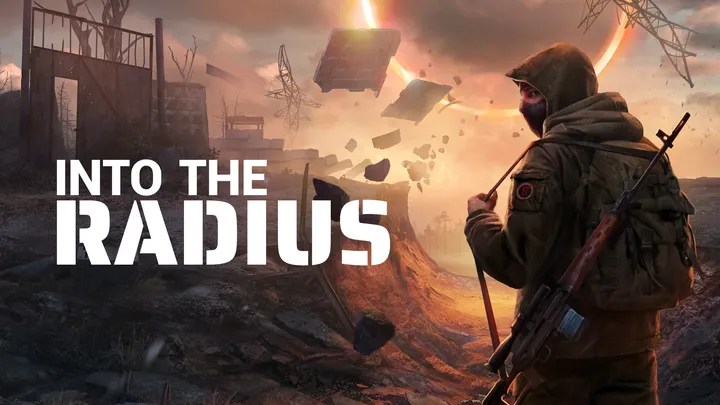
The official Meta Quest launch trailer is the fastest visual check for the game's mood: lonely landscapes, scavenging, weapons, anomalies, and the slow dread that makes the Radius feel hostile.
Who Should Buy It
Buy Into the Radius if you want a serious solo VR game, if you like survival systems, or if you enjoy shooters where preparation matters as much as reaction speed. It is also a strong pick for players who liked the atmosphere of Red Matter 2 but want something harsher, more mechanical, and more dangerous.
Skip it if your Quest time is mainly social, fitness-based, or short-session casual play. This is not the app I would hand to a nervous first-time VR visitor. It asks for patience, comfort with first-person movement, and a tolerance for tension. The payoff is that few Quest games make a backpack, a hallway, and a half-loaded magazine feel this meaningful.
Final Recommendation
Into the Radius still earns a recommendation because it gives Meta Quest something many libraries lack: consequence. The world is not friendly, the systems are not frictionless, and the game is better because of that. Every trip out feels like a small expedition. Every return to base feels earned.
If you want a VR app that treats your hands, your planning, and your nerves as part of the game, Into the Radius is still one of the easiest serious recommendations on Quest. It is not cozy. It is not quick. It is memorable.
If today's VR stories push you closer to jumping in, this Meta Quest referral can still give you a $30 credit on an eligible headset purchase.
Continue Reading
Stay in the VR guide loop with these related PlayTechDeep articles.
- Best VR Games in 2026: The Essential Meta Quest GuideAn evergreen guide to the best VR games in 2026 for Meta Quest owners, covering beginners, fitness, co-op…
- Ghosts of Tabor on Meta Quest: Is This Extraction Shooter Worth the Risk?Ghosts of Tabor on Meta Quest: a U.S.-focused app guide covering price, extraction gameplay, loadouts, raid…
- Moss on Meta Quest: Why It Still Feels Like VR’s Warmest Storybook AdventureA detailed U.S.-focused guide to Moss on Meta Quest, covering price context, how it plays, community response…
- Walkabout Mini Golf on Meta Quest: Why It Still Feels Like VR’s Easiest RecommendationA detailed U.S.-focused guide to Walkabout Mini Golf on Meta Quest, including price context, how it plays, why…