
August 13, 2026: Beat Saber’s long-standing price is changing, Meta has brought Threads to Quest, and several other reports point to experiments in VR hardware, control systems, and research. The available evidence varies by story: some reports describe confirmed launches or announcements, while others outline work that remains under study.
Beat Saber’s seven-year pricing streak ends
Source: Road to VR
Beat Saber has been priced at $30 since its 2019 launch. Road to VR reports that the breakout VR rhythm game is receiving its first price cut after seven years, ending a run in which it never once went on sale.
The change stands out because Beat Saber has maintained the same listed price for the entire period covered by the report. For people considering the game for the first time, a lower price could make its established rhythm-game format easier to try. However, the supplied material does not state the new price, the exact timing of the change, or whether the reduction applies equally across platforms.
Road to VR’s headline asks why the cut is happening, but the source packet does not provide a confirmed explanation. The firm details are limited to the game’s 2019 launch, its $30 price, its history without a sale, and the reported first reduction. Anyone deciding whether to buy now or wait still needs the missing price and timing information.
If Beat Saber is the game that caught your eye, this app referral link can give you 25% off on Meta. Use it only if it is useful to you.
Threads arrives inside Meta Quest
Source: Android Headlines
Meta has launched the Threads app on Quest. The app allows users to browse feeds, post updates, reply to posts, and watch videos while using the headset.
That gives Threads a recognizable social-media role in a VR setting. Users can keep up with the service, participate in conversations, and view video without leaving the Quest environment. The supplied evidence confirms those core functions, but it does not identify supported Quest models, pricing, or the details of the rollout.
Those omissions are important for anyone deciding whether to install the app immediately. The report establishes that Threads is available on Quest and describes what users can do with it; it does not establish broader headset compatibility or additional VR-specific features.
Glydr experiments with foot-based controls
Source: Auganix.org
Glydr’s Controller Translation beta combines foot-based analog inputs with existing gamepads for seated VR and PC gaming. The concept adds a lower-body input method while keeping a conventional gamepad in the control setup.
That arrangement is notable because it explores a different way to supplement gamepad control. Instead of replacing the controller, Glydr’s beta is described as translating foot input alongside it. The supplied material does not establish the system’s wider compatibility, release schedule, game support, or performance.
For now, the announcement is best understood as a beta-stage control experiment. Its relevance is clearest for seated play, where foot-based analog input may form part of the intended setup. Whether that approach becomes a broadly useful option depends on details not included in the source packet.
DPVR outlines commercial timing for P1 Max
Source: Auganix.org
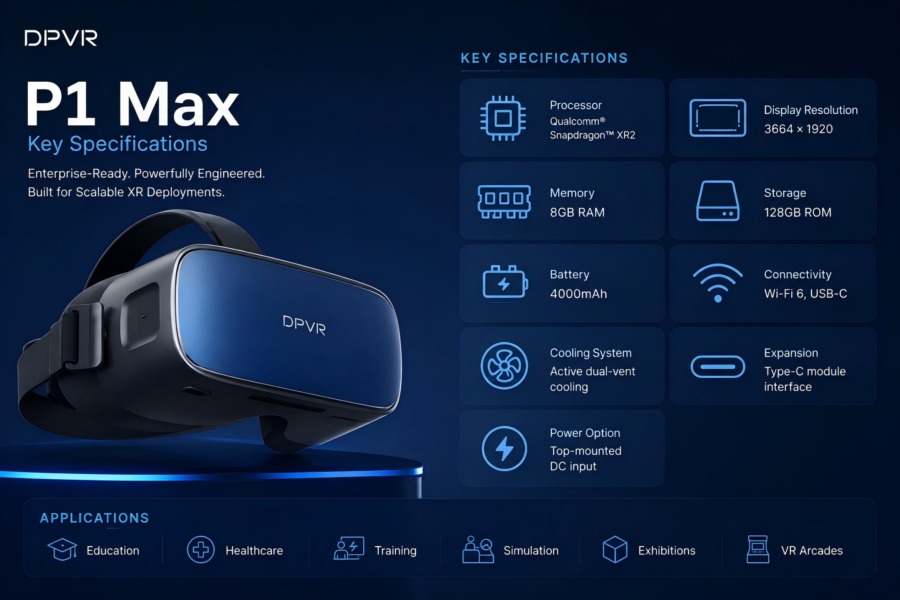
DPVR has announced pricing and availability details for the P1 Max enterprise standalone VR headset, according to the supplied Auganix.org excerpt dated August 12, 2026. The opening report identifies DPVR as a developer and manufacturer of VR hardware solutions.
The announcement places commercial availability, pricing, and timing at the center of the story. It therefore provides an enterprise-hardware signal rather than a consumer buying recommendation. The supplied excerpt is incomplete and does not include the actual price, commercial date, technical specifications, or compatibility information.
Those missing details prevent a more specific assessment of the P1 Max. What can be established is that DPVR has provided an availability timeline and pricing information for an enterprise standalone headset. Buyers evaluating the device would need the full announcement before comparing it with other hardware.
UK researchers study VR for memory recovery
Source: Spectrum News
A UK study is exploring whether virtual reality can help people recover from cognitive dysfunction caused by stroke. The research also raises the possibility that similar work could eventually help people experiencing memory loss as they age.
The wording describes an investigation into a potential use of VR, not a confirmed treatment result. The supplied evidence does not say that VR has already demonstrated a general memory-recovery effect, nor does it provide clinical outcomes, a treatment schedule, or information about an available product.
The distinction matters because this report concerns research rather than a feature that headset owners can use today. Its significance lies in the question being studied: whether immersive virtual environments might contribute to recovery from stroke-related cognitive dysfunction and, eventually, support people dealing with age-related memory loss.
More Quest coverage
These related pages extend the coverage across Quest games and recent VR developments:
- I Am Janitor Meta Quest Review (2026): Gameplay, Price, and Who It Fits
- VR Roundup for August 10, 2026: Meta Quest, HIT and the Stories Worth Watching
- Invulnerable Meta Quest Review (2026): Gameplay, Price, and Who It Fits
Meta Quest referral
If you use this link when buying a Meta Quest headset, you can receive a $30 store credit. Only use it if it feels useful.
https://www.meta.com/referrals/link/vr_gogogo · Meta Quest credit link · Open the referral · View the offer