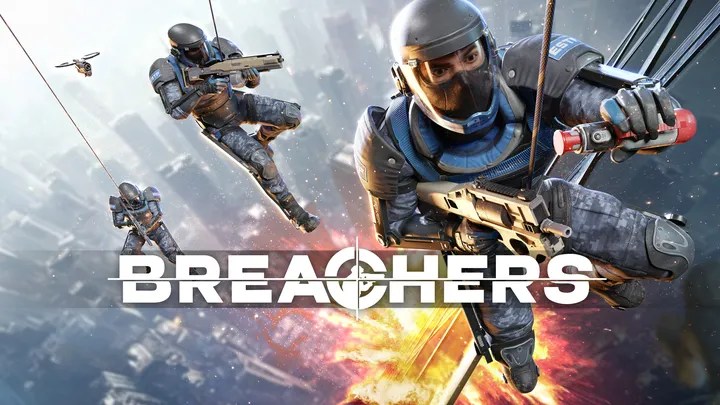
Breachers is the Meta Quest shooter I would recommend when someone wants teamwork before chaos. It is not about parachuting into a giant map or hoarding loot for extraction. It is about five players attacking, five players defending, a bomb-site objective, gadgets, angles, timing, and the very VR feeling of rappelling into danger with your own hands.
That focus keeps Breachers relevant. The Quest library now has several strong shooters, but Breachers owns a clean lane: compact 5v5 tactical rounds that sit somewhere between Counter-Strike discipline and Rainbow Six-style breaching fantasy, rebuilt around VR movement and physical interaction.
Meta Quest referral
If you use this link when buying a Meta Quest headset, you can receive a $30 store credit. Only use it if it feels useful.
Quick Buyer Snapshot
- Genre: 5v5 tactical VR FPS with attackers, defenders, gadgets, breaching, bomb-site objectives, team coordination, and close-quarters combat.
- Developer / publisher: Triangle Factory.
- U.S. price context: $19.99 in current U.S. public store snapshots. Quest Store DB recently tracked a $9.99 sale ending April 27, 2026.
- Best for: players who want tactical teamwork, gadget play, ranked-style pressure, and a more focused shooter than free-for-all VR chaos.
- Play mode: multiplayer, with standing and sitting support listed in public snapshots.
- Headset support: Meta lists support for Quest 2, Quest Pro, Quest 3, Quest 3S.
Why This Is Still Worth Covering
Breachers launched on the Meta Quest Store in April 2023 after a large open-alpha response, and the official launch press release framed the pitch clearly: plan, attack, breach, defend. That has remained the game’s identity. Enforcers push in, disarm bombs with an EMP, rappel, blow open walls, swing through windows, and use tools such as drones, cloaking devices, flashbangs, and breaching foam. Revolters defend with door blockers, tripmines, static field emitters, and proximity sensors.
That attacker/defender split is important because it gives every round a job. You are not just chasing kills. You are solving a small tactical problem with four other people while the other team tries to read, delay, punish, or surprise you.
How It Plays on Quest
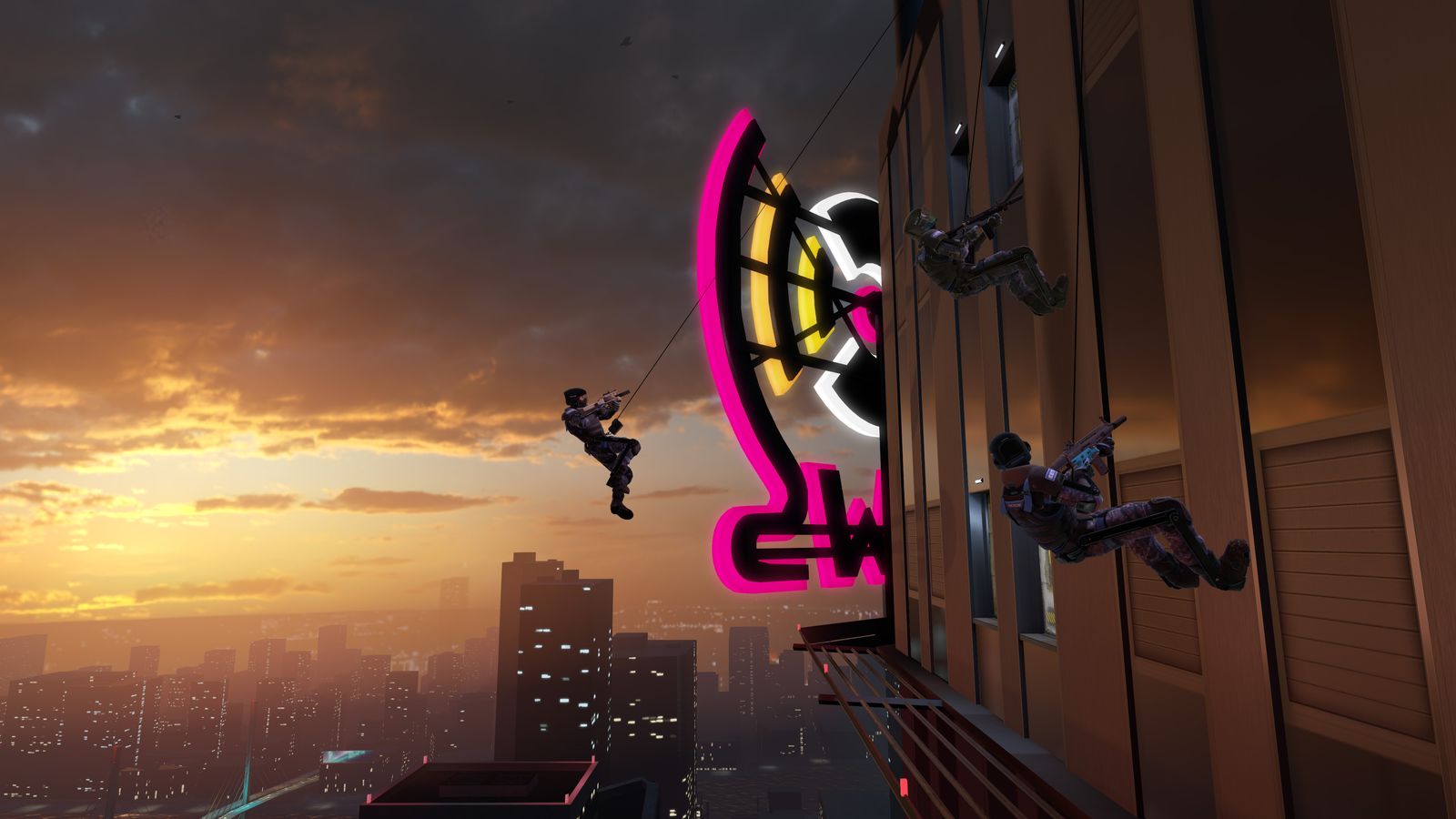
A typical Breachers round starts with planning and positioning. Attackers choose a route, coordinate gadgets, find a way in, and try to create pressure without walking into a trap. Defenders build the problem before the attackers arrive. They block doors, place sensors, hold angles, and prepare to punish bad timing.
The VR part is not decoration. Rappelling, swinging through windows, aiming around corners, physically handling weapons, and using gadgets all make the round feel more embodied than a flat-screen tactical shooter. When Breachers works, the tension is not only tactical. It is spatial.
Why the Objective Structure Matters
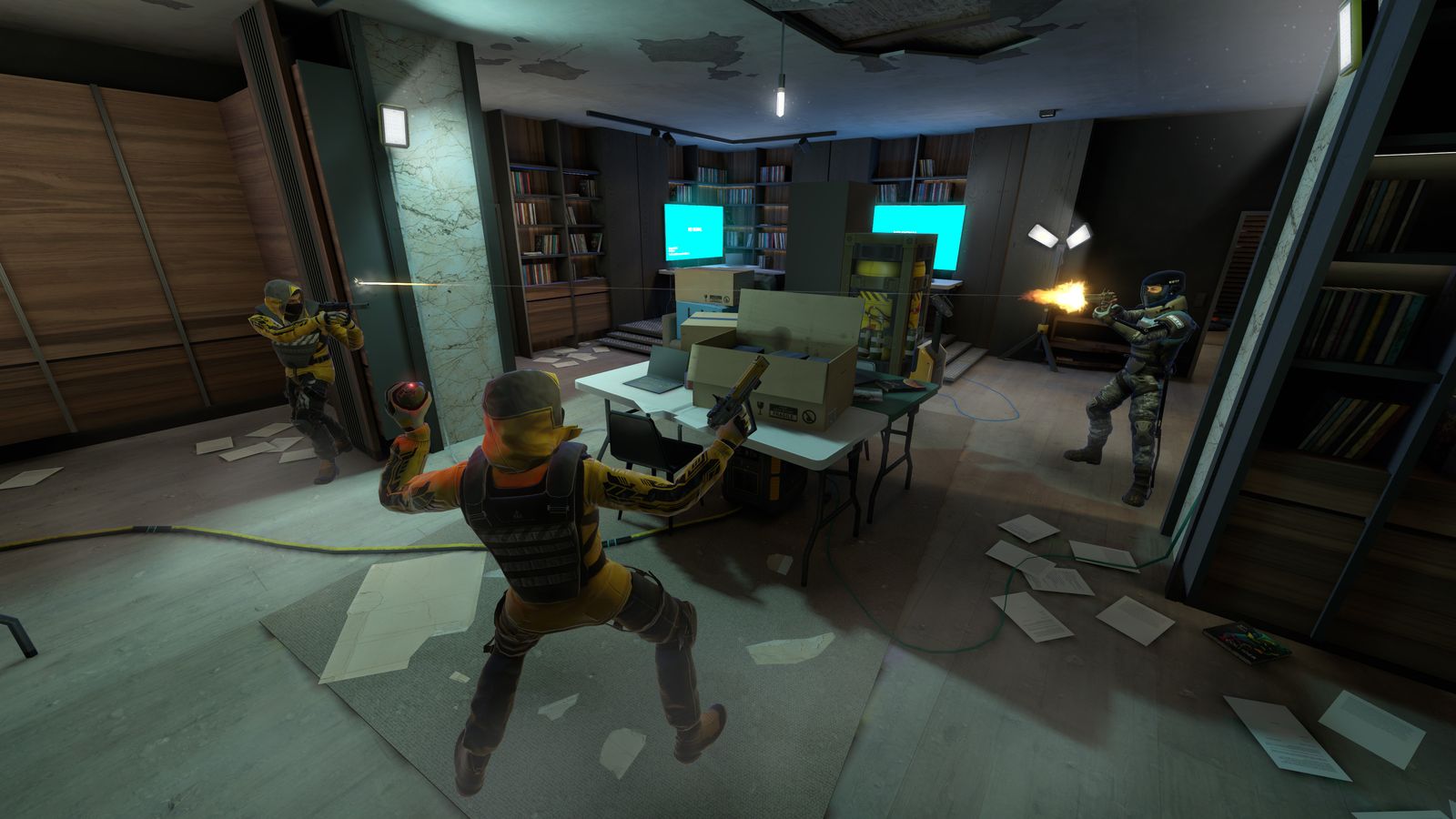
The EMP/bomb-site structure gives Breachers its backbone. Teams need a reason to move, hold, rotate, fake, and commit. The objective creates that reason. Without it, the game would become another hallway shooter. With it, each round becomes a small story: the first breach, the failed push, the flank, the last defender, the final defuse.
This is also why Breachers can be easier to understand than some sandbox shooters. New players may struggle with maps and gadgets, but the mission is clear. Attackers must get in and solve the site. Defenders must stop them. Everything else is execution.
Combat, Gadgets, and Team Pressure
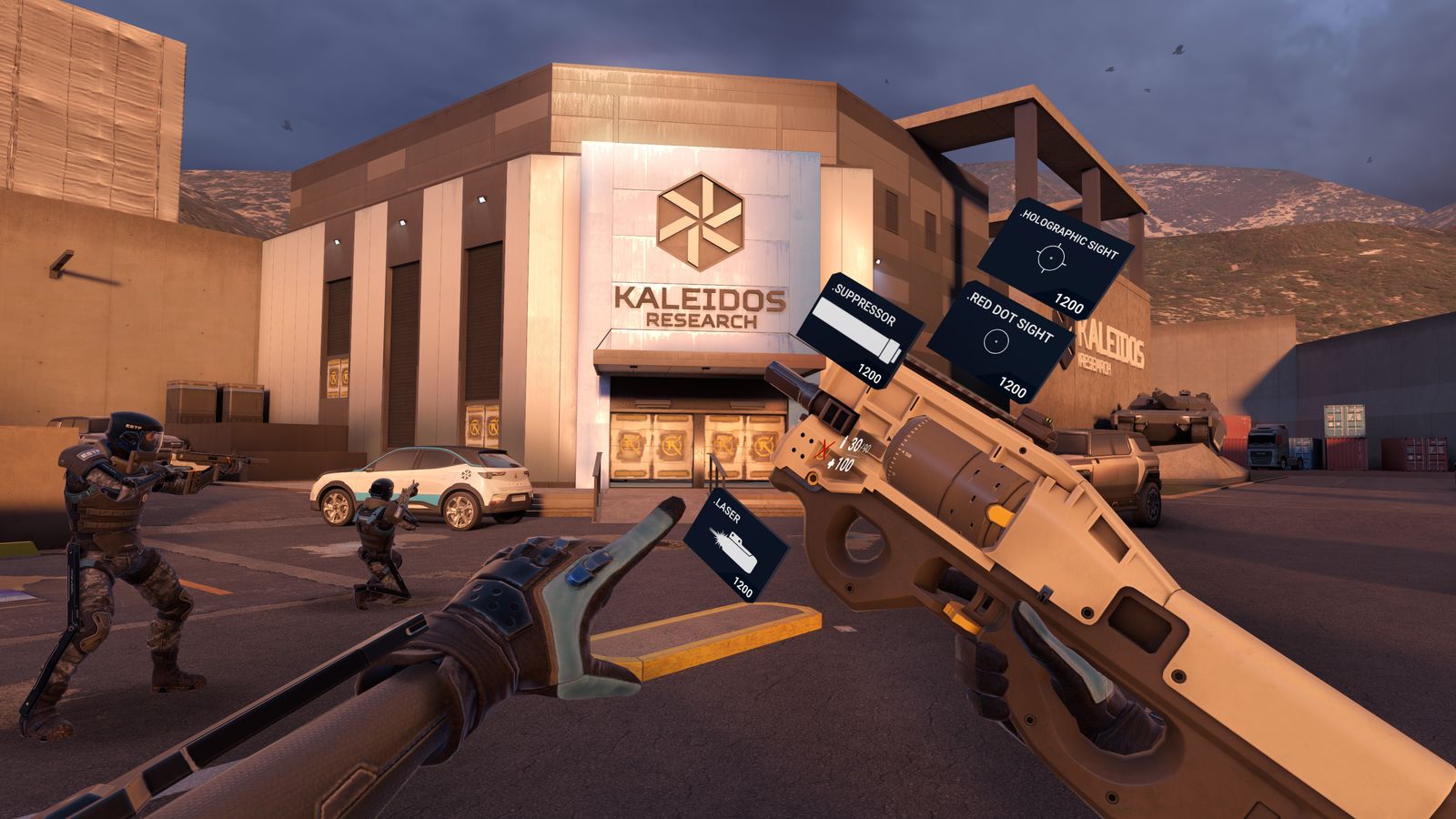
Breachers is strongest when teams actually talk. A solo player can still enjoy it, but the design clearly rewards communication. A drone callout, a flashbang entry, a teammate watching the rotate, or one well-timed wall breach can change the whole round. This is not the same flavor of fun as Pavlov’s broad shooter-platform energy or Ghosts of Tabor’s extraction anxiety.
The gadgets matter because they let players contribute beyond aim. Good aim helps, but information, denial, timing, and utility can win rounds. That makes Breachers feel more tactical and less purely mechanical than many VR shooters.
Community and Store Signals
Meta currently shows a 4.5 out of 5 rating from about 6,024 ratings. Quest Store DB currently tracks about 6K ratings, 3.2K reviews, a $19.99 base price, version 36.2.1, many supported languages, one current bundle, and 15 add-ons. Steam shows a Very Positive all-time review snapshot and notes cross-play with Quest and PSVR2 players. That combination suggests Breachers still has a functioning multi-platform player base rather than being a one-launch wonder.
The community signal is strong but not friction-free. Positive players praise teamwork, gadget depth, tactical clarity, and the fact that VR makes breaching feel physical. Critical players often point to matchmaking, sweaty lobbies, bugs, or the normal frustrations of competitive shooters. That is the tradeoff: Breachers is better when people take it seriously, but seriousness can make public lobbies less gentle.
Price and Value
At $19.99, Breachers is easier to justify than many premium Quest apps if tactical multiplayer is your thing. The add-on ecosystem is mostly cosmetic or bundle-driven, so the base game is the real purchase. My recommendation is to buy for the core loop, not for skins.
The value case gets stronger if you have friends. A coordinated five-player team can turn Breachers into a long-term habit. Solo queue is more variable. If you are patient and enjoy learning callouts, it can still work. If you expect every lobby to communicate cleanly, you will be disappointed.
Who Should Buy It
Buy Breachers if you want a tactical VR FPS with clear objectives, gadgets, breaching, and team communication. It is a strong fit for players who like Counter-Strike or Rainbow Six-style structure but want the physicality of VR: leaning, reaching, rappelling, aiming, and using tools with your hands.
It also pairs well with other shooters. Pavlov Shack gives you broad FPS culture. Ghosts of Tabor gives you extraction risk. Population: One gives you free vertical battle royale. Breachers gives you clean 5v5 tactical rounds.
Who Should Wait
Wait if you dislike competitive voice chat, if you mostly play solo and hate coordination, or if you want a casual shooter where mistakes do not matter much. Breachers is understandable, but it is not brain-off entertainment. The best moments require teamwork.
New Quest users should also build VR movement comfort first. Breachers is not wildly uncomfortable for everyone, but tactical VR shooters demand turning, aiming, listening, and reacting quickly. If you are still learning VR basics, start slower.
Official Store Page
Use the official Meta Quest store page to confirm live U.S. price, supported headsets, current rating, comfort details, age rating, version, add-ons, and sale timing before buying.
Official Video
The official launch trailer is the quickest visual check for the pitch: rappelling, breaching, gadgets, close-quarters fights, and objective-based team pressure.
Final Recommendation
Breachers still feels sharp because it knows exactly what it wants to be. It is a tactical VR shooter about entering dangerous rooms with a plan. That sounds simple, but in VR, simple plans become memorable when your hands are on the rope, your teammate is counting down, and the room explodes open.
My recommendation is strongest for players who want focused 5v5 multiplayer and are willing to communicate. If you want casual shooting, look elsewhere. If you want VR tactics with clean objectives and real team pressure, Breachers remains one of the strongest Quest options.
If today's VR stories push you closer to jumping in, this Meta Quest referral can still give you a $30 credit on an eligible headset purchase.
Continue Reading
Stay in the VR guide loop with these related PlayTechDeep articles.
- Drop Dead: The Cabin on Meta Quest: Co-Op Zombie Survival With a Mixed Reality TwistDrop Dead: The Cabin on Meta Quest: a U.S.-focused app guide covering price, co-op zombie survival, mixed…
- Contractors Showdown: ExfilZone on Meta Quest: Is This Big VR Shooter Worth It?Contractors Showdown: ExfilZone on Meta Quest: a U.S.-focused app guide covering price, ExfilZone, battle…
- Pavlov Shack on Meta Quest: Why This Tactical VR Shooter Still MattersPavlov Shack on Meta Quest: a U.S.-focused app guide covering price, weapon handling, Search and Destroy, TTT…
- Population: One on Meta Quest: Why This Free VR Battle Royale Still Has a PlacePopulation: One on Meta Quest: a U.S.-focused app guide covering free-to-play value, vertical combat, sandbox…