


Understand the Modes and Controls
nDreams confirms that Little Cities includes a multi-island campaign for structured progression, while its Sandbox update offers a more open-ended building experience. Choose between guided goals and freer construction according to how you prefer to play.
nDreams also confirms support for Touch controllers and hand tracking, with seated, standing, and room-scale play. Snowy Islands is described separately as DLC, so treat it as separate content rather than assuming it belongs to the base game.
Little Cities is the Meta Quest city builder I recommend when someone wants VR to feel calm instead of intense. It does not ask you to survive a raid, win a gunfight, punch through a workout, or solve a horror room under pressure. It hands you a tiny island, a few roads, a few zones, and the quiet pleasure of watching a miniature city wake up.
Meta Quest referral
If you use this link when buying a Meta Quest headset, you can receive a $30 store credit. Only use it if it feels useful.
Why Little Cities Still Belongs on a Quest Shortlist
The strongest reason to cover Little Cities in 2026 is not novelty. It is clarity. The pitch is simple: build a small city on a bright island, place roads and zones, add services, keep citizens happy, and lean down into the model to watch life move through what you designed. The game makes that loop understandable in seconds.
That matters because many VR apps are either too mechanically dense or too physically demanding for new users. Little Cities moves in the other direction. It is colorful, readable, and welcoming. It lets VR be a tabletop toy, not a test.
How It Plays on Quest
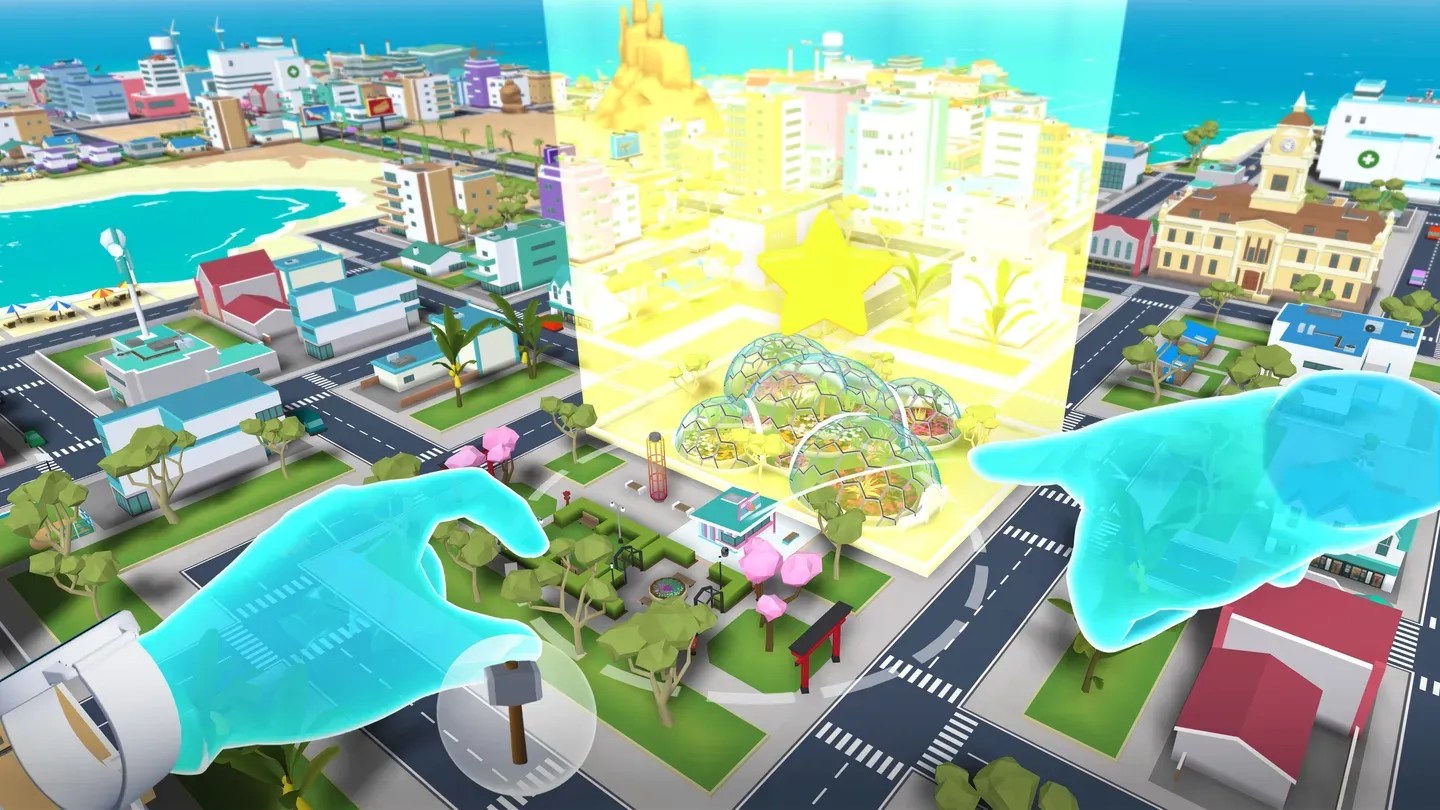
You start small. Roads define the shape of your island city. Residential, commercial, and industrial zones give the city its rhythm. Power, water, schools, hospitals, fire stations, police services, transport hubs, and attractions gradually turn the layout into a working place. The systems are familiar if you have ever played a city builder, but Little Cities keeps the interface light enough for VR.
The best part is the diorama feeling. You are not floating above a flat map with a mouse cursor. You are standing around a tiny world. You can lean closer, inspect a neighborhood, watch vehicles move, and treat the city like a model you are shaping with your hands.
Hand Tracking Makes the Game Feel More Natural
One of Little Cities’ smartest updates was full hand tracking support. Android Central reported that the update let players build and maintain a city without controllers, using their hands instead. That fits the tone of the game perfectly. A cozy city builder benefits from fewer barriers between you and the little island.
Controllers still make sense if you prefer precision, but hand tracking gives Little Cities a stronger identity. Pinching, pointing, and arranging a miniature city with your real hands makes the app feel less like a port of a management game and more like a native VR toy.
The Island Format Keeps the Game Friendly

Traditional city builders can become sprawling, stressful, and abstract. Little Cities avoids that by using compact islands. Each island gives you boundaries, color, terrain, and a clear sense of place. Instead of feeling like an endless spreadsheet, the city becomes a small scene you can understand at a glance.
That does mean this is not the deepest city builder on the market. The tradeoff is intentional. Little Cities is about flow, charm, and approachable problem solving. It wants you to enjoy planning a pleasant island, not spend three evenings debugging tax policy.
Sandbox Mode and Quest 3 Updates Add Longevity
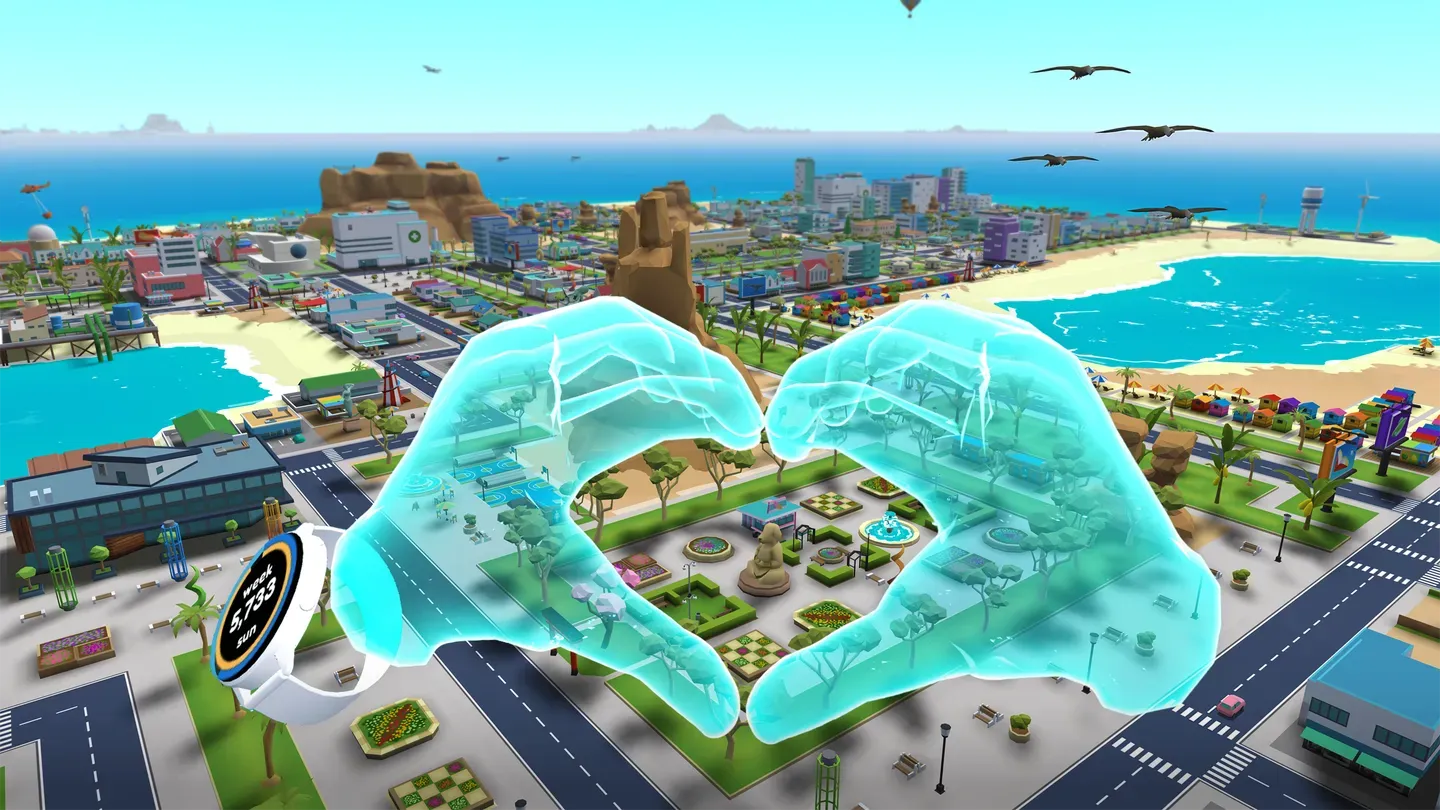
The current store copy highlights Sandbox mode, attractions, snowy island DLC, and a free Meta Quest 3 update with improved visuals and haptic feedback. Those additions are important because they push the game beyond a one-and-done campaign path. If you mainly want freedom to create, Sandbox mode is the reason to keep Little Cities installed.
Attractions also help the game feel more personal. Donut shops, helter skelters, statues, transport hubs, and different facilities give your city more personality than rows of basic zones. The appeal is not just efficiency. It is making a place that looks like yours.
Community and Store Signals
Meta currently shows a 4.5 out of 5 rating from about 743 ratings. VRDB currently tracks a 4.5 rating from more than 700 reviews and marks overall sentiment as Very Positive. Quest Store DB similarly tracks hundreds of ratings and reviews with a $19.99 current price snapshot. That is not a mega-hit scale, but it is a strong signal for a niche, cozy city builder.
There was also launch-era momentum. UploadVR reported that Little Cities cracked the Quest Store top-selling list shortly after release, which suggests the game found an audience quickly. More importantly, the long-term rating profile still looks healthy for a relaxed simulation app.
What It Does Better Than Bigger City Builders
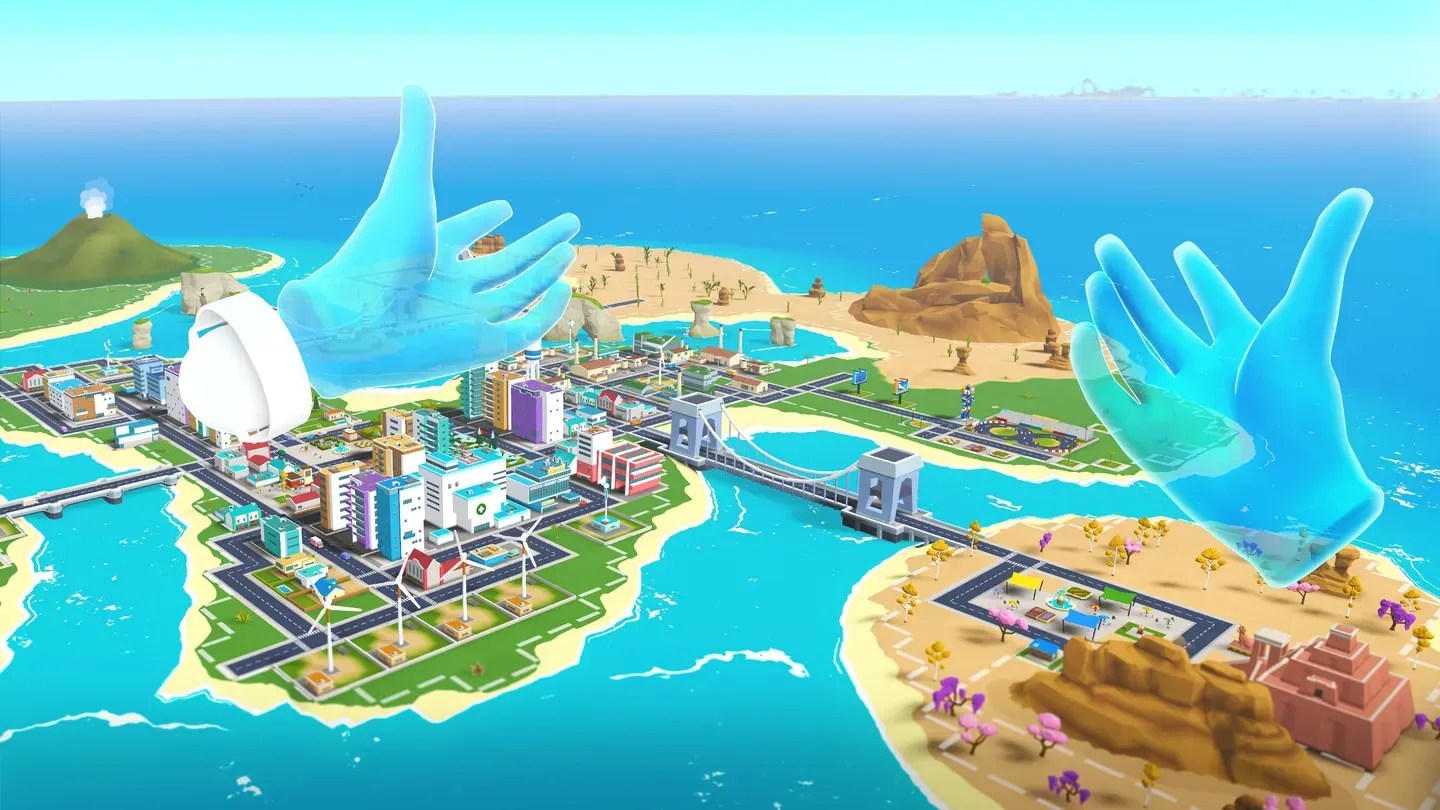
Little Cities understands that VR comfort is part of design. A huge, complex city builder might sound impressive, but it can become exhausting inside a headset. Little Cities keeps the scale compact and the goals readable. You know what you are placing, why it matters, and how it changes the little island in front of you.
That makes it especially good for new Quest owners. It teaches the idea that VR can be observational and creative. You can build something, step back, and simply look at it. Not every good VR app needs sweat, fear, or reflexes.
Where It May Feel Too Light
The same friendliness can also be the weakness. If you want deep traffic simulation, economic complexity, huge city sprawl, or PC-style management depth, Little Cities may feel simplified. It is a cozy city creator first and a hardcore simulation second.
It is also single-player, so do not buy it expecting a social building world. The value is personal creativity and relaxing planning, not shared construction or competitive optimization.
Who Should Buy It
Buy Little Cities if you want a friendly, non-combat Quest app with clear goals, bright visuals, comfortable play, hand tracking, and a strong diorama feel. It is a strong fit for casual players, simulation fans who want something lighter, parents looking for a gentler VR recommendation, and anyone who wants a calm contrast to shooters.
It is also a smart library pick if your Quest collection already has intense apps. After Resident Evil 4 VR, Ghosts of Tabor, Contractors Showdown, Breachers, or Pavlov Shack, Little Cities feels like opening a window.
Who Should Wait
Wait if you only want high-action VR, deep strategy, multiplayer, or endless systemic complexity. Also check current store details before buying if hand tracking is a deciding factor for you, because feature availability and comfort notes should always be confirmed on the live Meta page.
If you are unsure, watch the trailer first. Little Cities explains itself visually. If the thought of building a tiny island city makes you relax, the game is probably aimed at you. If it looks too gentle, trust that reaction.
Official Store Page
Use the official Meta Quest store page to confirm live U.S. pricing, supported headsets, comfort details, current rating, DLC, and hand tracking information before buying.
Official Video
The official Meta Quest launch trailer shows the core fantasy quickly: draw roads, place buildings, watch the island grow, and lean into a miniature city that feels made for VR.
Final Recommendation
Little Cities is worth recommending because it makes VR feel approachable. It is not trying to overwhelm you with scale. It is trying to make city creation feel tactile, cheerful, and comfortable. That is a valuable lane in the Quest library.
My recommendation is strongest for cozy-game players, VR beginners, simulation fans who want less pressure, and anyone who wants a bright creative app between heavier games. It may not satisfy hardcore city-builder players forever, but as a friendly Quest city creator, it still has a clean place on the shortlist.
If today's VR stories push you closer to jumping in, this Meta Quest referral can still give you a $30 credit on an eligible headset purchase.
Continue Reading
Stay in the VR guide loop with these related PlayTechDeep articles.
- Garden of the Sea on Meta Quest: A Cozy VR Life Sim for Farming, Creatures, and Quiet ExplorationGarden of the Sea on Meta Quest: a U.S.-focused app guide covering price, cozy farming, creatures, crafting…
- Vacation Simulator on Meta Quest: The Funny, Family-Friendly VR Sandbox That Still WorksVacation Simulator on Meta Quest: a U.S.-focused app guide covering price, family-friendly VR, hand tracking…
- PowerWash Simulator VR on Meta Quest: The Cozy Cleaning Game That Still Feels DifferentPowerWash Simulator VR on Meta Quest: a U.S.-focused app guide covering price, cozy cleaning gameplay, co-op…
- I Am Cat on Meta Quest: Why This Viral Cat Sandbox Is More Than a JokeI Am Cat on Meta Quest: a U.S.-focused app guide covering price, viral sandbox gameplay, quests, multiplayer…