


A Fisherman’s Tale is the Meta Quest puzzle game I recommend when someone wants to understand why VR can do things flat games cannot. It is small, strange, clever, and over faster than many modern players expect. But its central trick is still wonderful: you are inside a lighthouse, handling a model lighthouse, while a larger version of you is doing the same thing around you.
Quick puzzle answer
A Fisherman’s Tale is strongest when readers want a short VR puzzle that could not work the same way on a flat screen. Its miniature-world scale trick remains the reason to play it.
- Best fit: puzzle fans, VR newcomers, and players who want clever spatial design.
- Main appeal: nested scale puzzles, lighthouse atmosphere, and low-motion comfort.
- Skip if: you want a long campaign, combat, or high replay value.
That makes it a strong follow-up after The Climb 2. The Climb 2 sells height through your body. A Fisherman’s Tale sells scale through your hands. Both are narrow, focused VR ideas. This one just swaps sweaty palms for the quiet joy of realizing the puzzle is nested inside itself.
Meta Quest referral
If you use this link when buying a Meta Quest headset, you can receive a $30 store credit. Only use it if it feels useful.
Quick Buyer Snapshot
- Genre: VR puzzle adventure, surreal story game, scale-based puzzle, nautical fantasy, and beginner-friendly narrative experience.
- Developer / publisher: InnerspaceVR, published by Vertigo Games, with ARTE France involvement.
- U.S. price context: approximately USD $7.60.
- Best for: players who want a short, clever, award-winning VR puzzle game that uses scale, recursion, and hand interaction instead of combat or grinding.
- Play mode: VRDB lists Single User.
- Player modes: VRDB lists Sitting, Standing, and Room Scale support.
- Comfort context: VRDB lists Comfortable.
- Headset support: Meta lists support for Quest, Quest 2, Quest Pro, Quest 3, Quest 3S.
Why A Fisherman's Tale Still Matters
A Fisherman’s Tale matters because its main mechanic could not work the same way outside VR. The official store description calls it the VR Awards Game of the Year 2019 and describes a mind-bending adventure where being turned upside down and inside out is not merely a phrase. The original launch press release described a multi-dimensional single-player co-op idea, where you effectively team up with versions of yourself across nested scales.
That is the key. This is not just a puzzle game viewed in VR. The puzzle is about presence, scale, and the fact that your hand can reach into a model world while another version of that hand looms above you. It is one of those compact games that explains the medium by making you do something impossible.
How It Plays on Quest
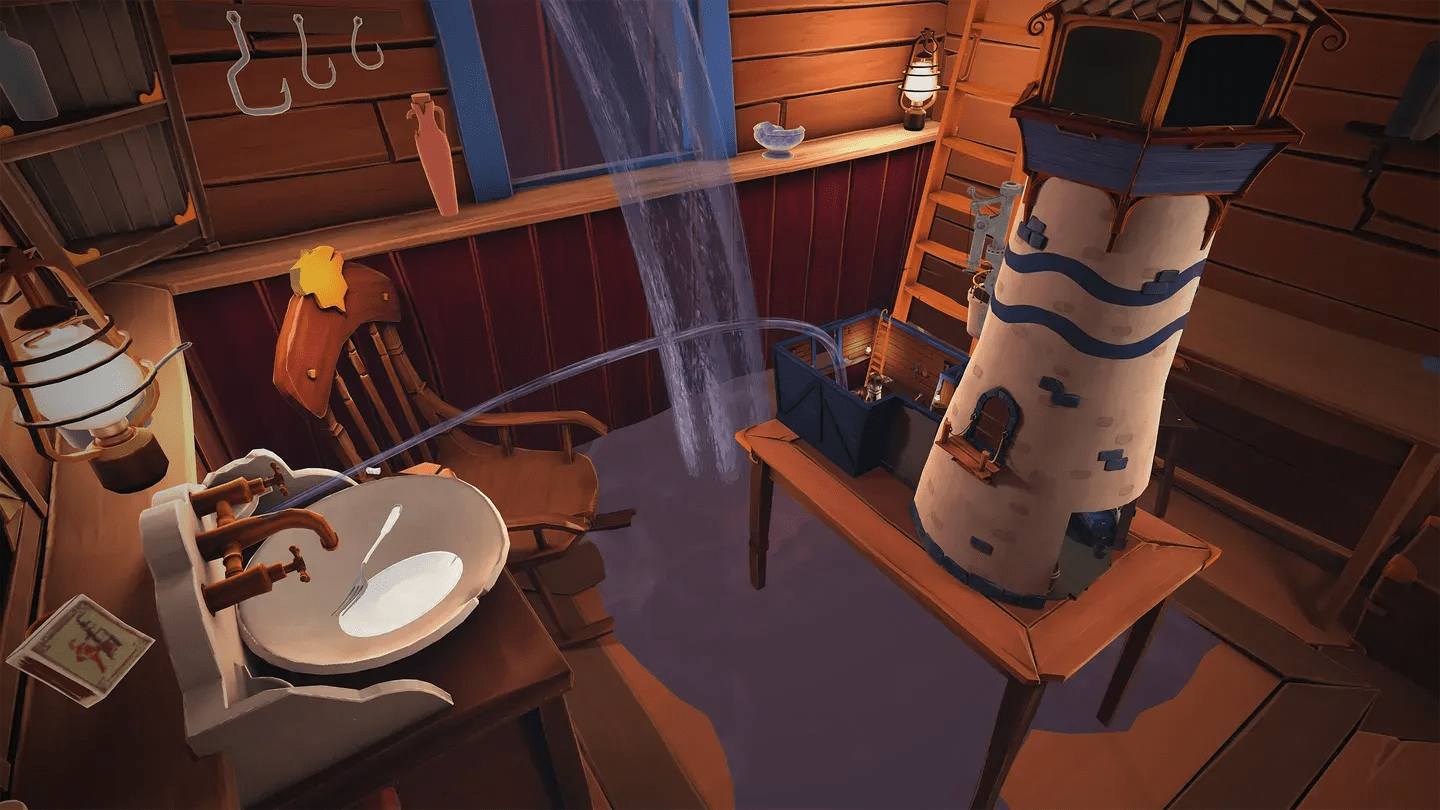
You play as Bob, a tiny fisherman puppet living inside a lighthouse. A storm warning pushes you toward the lighthouse light, but the room around you is not as simple as it first appears. The model lighthouse in front of you mirrors the space you occupy, and actions in one scale affect another.
The practical play is object-focused. You pick things up, move them between scales, solve environmental puzzles, interact with strange companions, and gradually understand the rules of this recursive world. It is not hard because it demands fast reflexes. It is hard because it asks you to think spatially.
The Scale Trick Is the Whole Magic
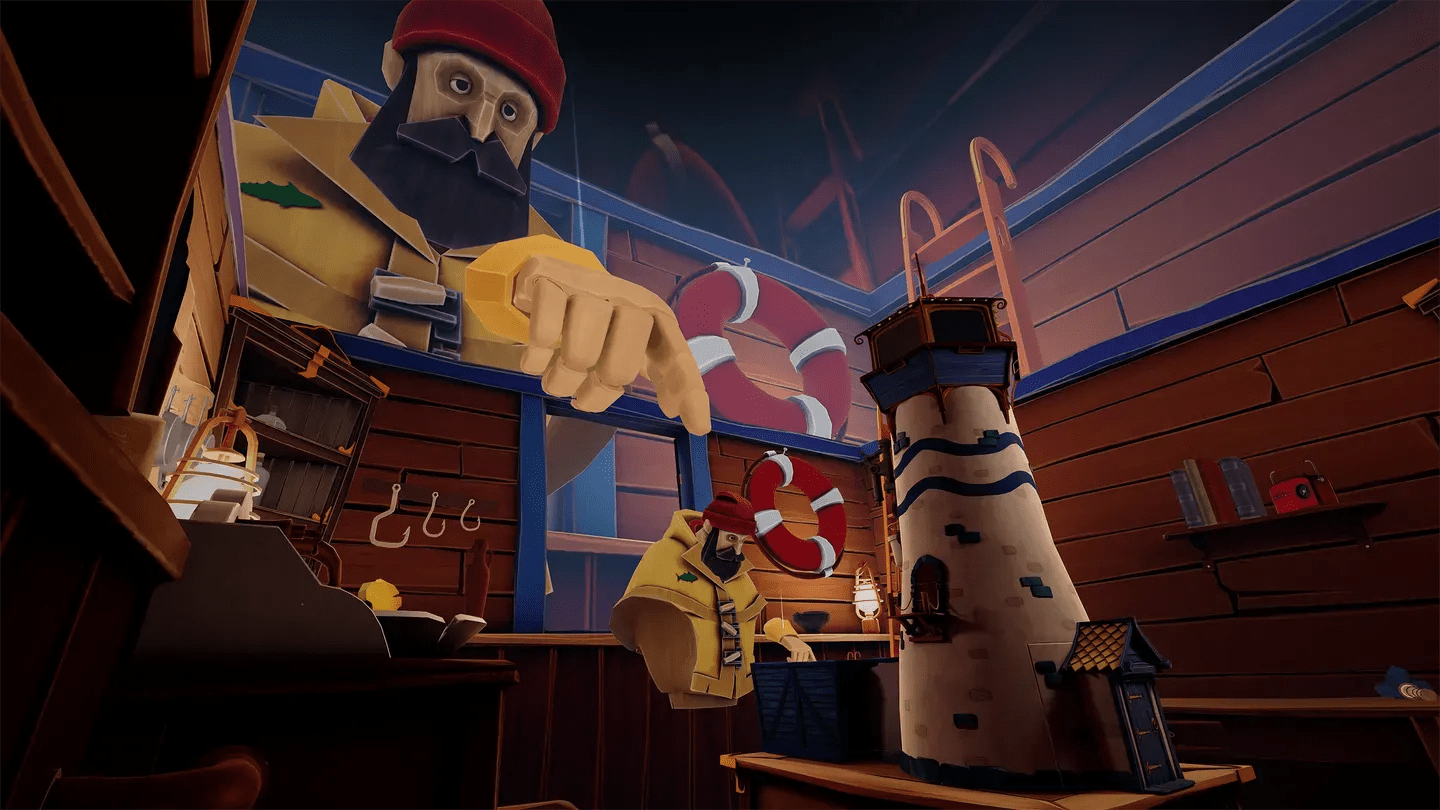
A Fisherman’s Tale is at its best when the brain catches up to the room. You reach into the model. Something changes around you. You realize the larger world is also watching you. Then the puzzle solution becomes physical, not abstract. You do not only know the answer; you perform it at the right scale.
That is why the game remains easy to recommend despite its age. Plenty of newer Quest games look sharper or offer more hours. Fewer have a central idea this clean.
The Storybook Tone Keeps It Warm
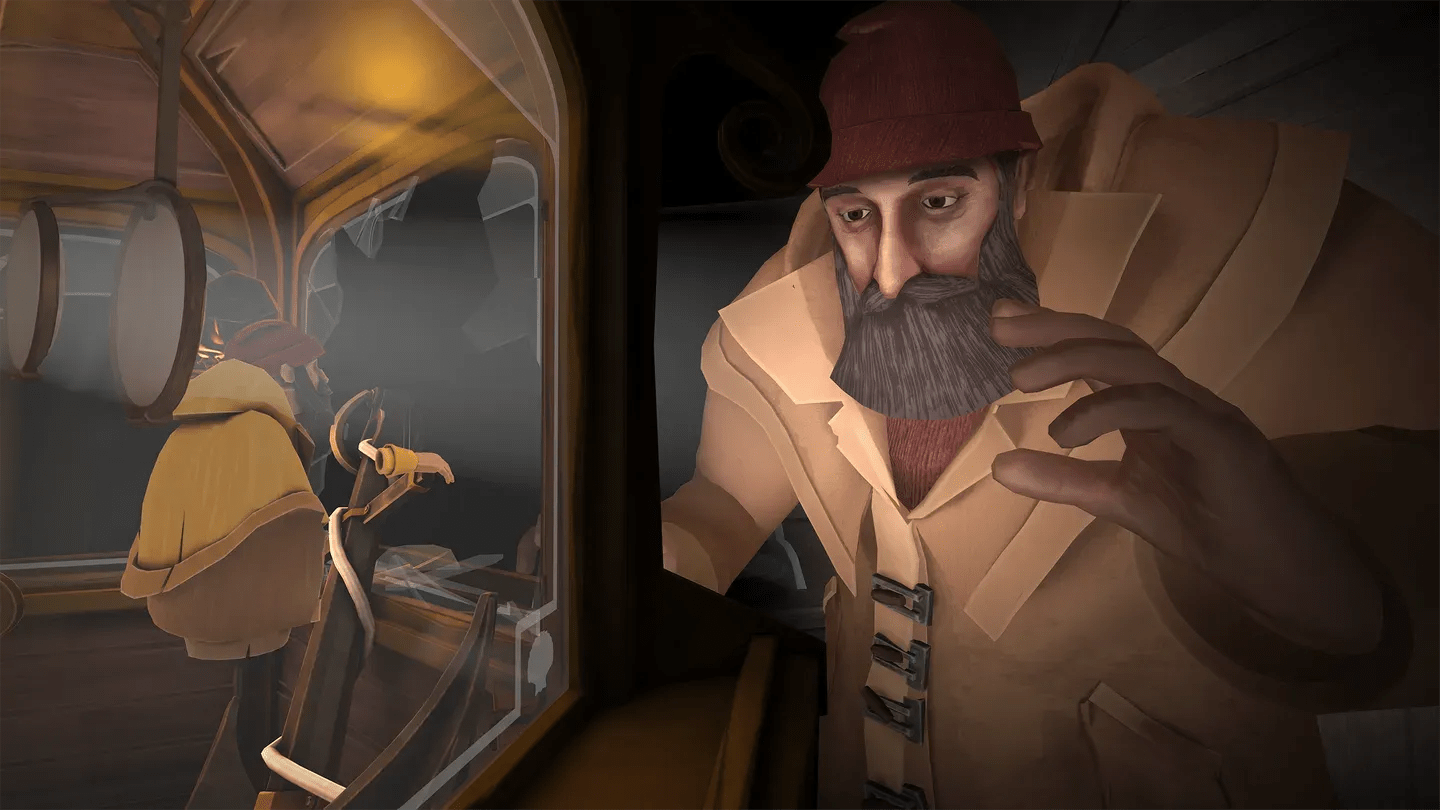
The game could have been a sterile physics demo. Instead, it wraps the mechanic in a nautical storybook mood: wood, rope, lighthouse machinery, puppet characters, sea creatures, storm warnings, and a slightly melancholy fairy-tale voice. That tone helps the puzzles feel handmade rather than clinical.
It also makes the app friendlier for puzzle-curious players who do not want horror, combat, or high-pressure timing. The world is odd, but not hostile in the way many VR adventures can be.
It Is Short, and That Matters
The biggest caveat is length. UploadVR’s Quest launch coverage praised the original game strongly, but also repeated a common review critique: the experience is brief. That has always been the tradeoff with A Fisherman’s Tale. It is not a 20-hour purchase. It is a compact, polished VR idea.
That makes the current U.S. public store price important. At $9.99 in current snapshots, the value argument is much easier than it would be at a premium campaign price. The original launch press release referenced a $14.99 launch price on earlier platforms, so price context has shifted in a buyer-friendly direction.
The Weird Nautical Details Help It Stick
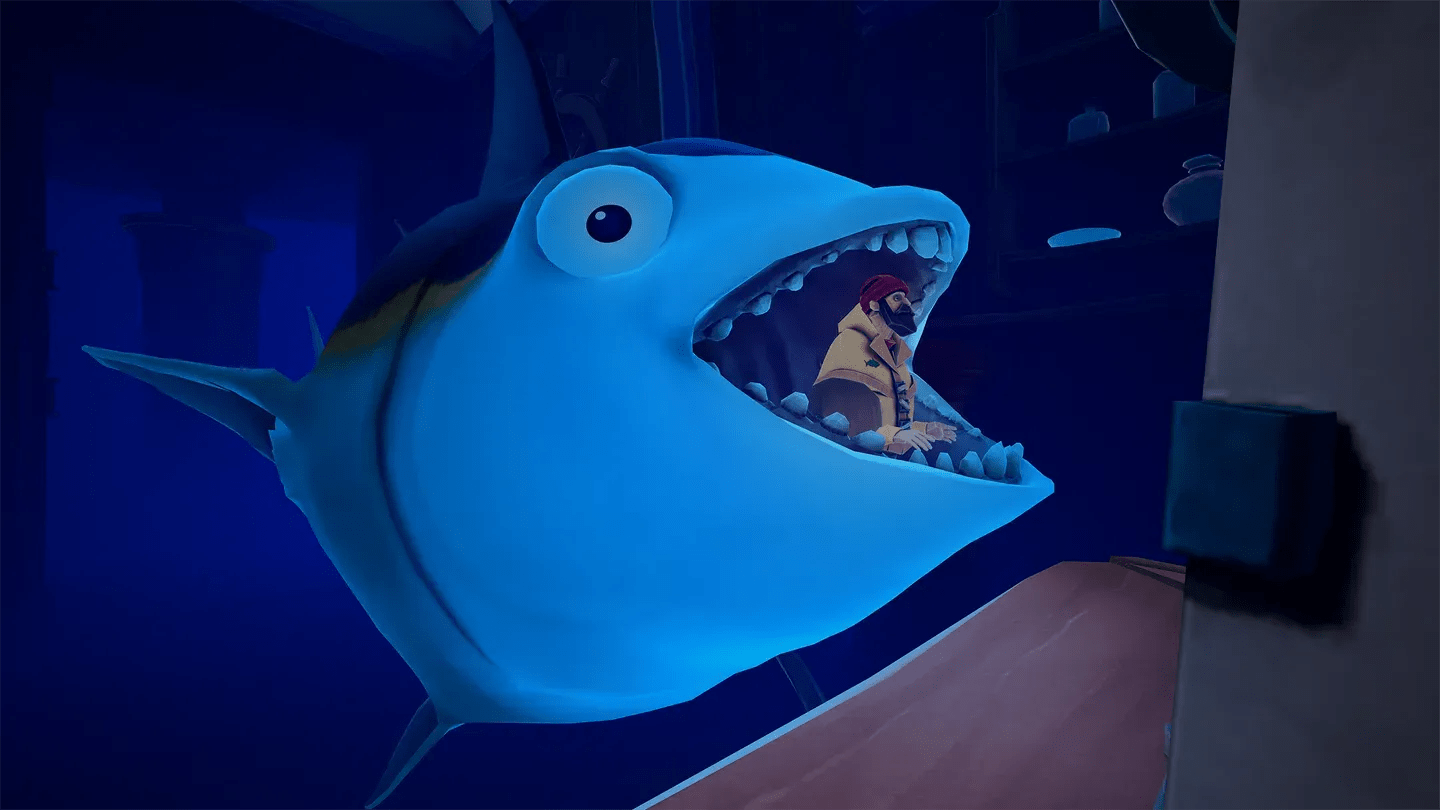
A Fisherman’s Tale also benefits from memorable imagery. A tiny lighthouse, a puppet fisherman, impossible rooms, sea creatures, and scale-shifting objects make it more memorable than a plain puzzle box. The art direction is not photorealistic, but that works in its favor. The handmade look keeps the surreal logic readable.
For Quest readers, that matters because puzzle games often blur together. This one has an identity you can describe in one sentence: the lighthouse contains a lighthouse that contains you.
Price, Rating, and Community Signals
Meta currently shows a 4.5 out of 5 rating from about 2,400 ratings. VRDB currently tracks a $9.99 U.S. price, a 4.5-star Very Positive Quest rating from about 2.4K verified-owner ratings, Single User mode, Comfortable comfort, and Sitting, Standing, plus Room Scale support. Steam public data also shows Very Positive sentiment, with the PC version commonly listed around $14.99 outside sale periods.
Those signals fit the app’s role. It is not a forever game. It is a highly focused VR puzzle experience with a strong reputation, a modest current Quest price, and enough design originality to remain worth discussing years later.
What It Does Better Than Many Puzzle Apps
A Fisherman’s Tale gives the puzzle a physical reason to be in VR. Many puzzle games ask you to move objects in 3D. This one asks you to understand your relationship to the object, the model, the room, and your larger or smaller self. That is a richer spatial question.
It also avoids overexplaining its own cleverness. The best moments arrive when you manipulate something and suddenly understand the recursion without needing a long tutorial. Small games can feel enormous when the central trick is this elegant.
Where It May Disappoint
A Fisherman’s Tale may disappoint players who judge value mainly by hours. It may also feel too gentle for players who want difficult puzzle chains, deep mechanics, or replayable challenge modes. Once you know the solutions, the mystery naturally loses some force.
It is also not the best pick for someone who wants modern Quest 3 spectacle. The game predates many current visual showcases. Its strength is design, not raw rendering muscle.
Who Should Buy It
Buy A Fisherman’s Tale if you want a short, clever, comfortable VR puzzle adventure that shows why scale and hand presence matter. It is a strong fit for puzzle fans, VR newcomers, design-minded players, and anyone who enjoyed games like The Room VR, Red Matter, Moss, or I Expect You To Die but wants something smaller and stranger.
It is also a good recommendation for people who ask for VR experiences that are not violent, fitness-based, or social. This is quiet proof that the headset can make a tiny room feel impossible.
Who Should Wait
Wait if you need long playtime, replayable systems, multiplayer, or high-end visuals. Also wait if you dislike short narrative puzzle games even when they are well designed. A Fisherman’s Tale is a miniature, and miniatures are not for everyone.
If you like the idea of solving a puzzle by reaching into a smaller version of the room you are standing in, though, this is still one of the cleanest examples of VR doing its own thing.
Official Store Page
Use the official Meta Quest store page to confirm live U.S. pricing, headset support, comfort details, current rating, and sale timing before buying.
Official Video
The official Vertigo Games Quest launch trailer shows the core idea quickly: a lighthouse inside a lighthouse, a puppet fisherman, and puzzles that bend scale around your hands.
Final Recommendation
A Fisherman’s Tale is worth recommending because it is one of the cleanest small arguments for VR puzzle design. It does not need endless content to make its point. It needs one impossible room and the confidence to let you figure out why it matters.
My recommendation is strongest for players who value originality over length. Buy it if you want a clever, comfortable, memorable VR puzzle story at a modest price. Skip it if you need dozens of hours. This is not a voyage across the ocean. It is a perfect little ship in a bottle.
If today's VR stories push you closer to jumping in, this Meta Quest referral can still give you a $30 credit on an eligible headset purchase.
Continue Reading
Stay in the VR guide loop with these related PlayTechDeep articles.
- The Curious Tale of the Stolen Pets on Meta Quest: A Tiny Diorama Puzzle Game for Calm VR SessionsThe Curious Tale of the Stolen Pets on Meta Quest: a U.S.-focused app guide covering price, cozy diorama…
- Ghost Giant on Meta Quest: A Small Diorama Story About Helping Someone Feel Less AloneGhost Giant on Meta Quest: a U.S.-focused app guide covering price, diorama story, Louis, puzzles, comfort…
- Down the Rabbit Hole on Meta Quest: A Wonderland Diorama Adventure That Still Feels MagicalDown the Rabbit Hole on Meta Quest: a U.S.-focused app guide covering price, Wonderland diorama adventure…
- Tentacular on Meta Quest: A Weirdly Sweet Physics Puzzle Game With Giant Wobbly TentaclesTentacular on Meta Quest: a U.S.-focused app guide covering price, physics puzzles, giant tentacles, sandbox…
Related guide: Use The Room VR as the story-driven puzzle comparison.