

The Curious Tale of the Stolen Pets is the Meta Quest recommendation I would hand to someone who wants VR to feel like a quiet storybook instead of another scoreboard. It is a family-friendly diorama puzzle game from Fast Travel Games where tiny worlds float in front of you, pets are hidden inside playful scenes, and the main skill is not reflex speed. It is noticing.
Quick cozy puzzle answer
The Curious Tale of the Stolen Pets is a gentle Meta Quest diorama puzzle game, not a fast adventure or action title. It is best for readers who want a calm, storybook-like VR session with tiny interactive worlds, hidden pets, and low motion pressure.
- Best fit: families, cozy-game players, puzzle fans, and new VR users.
- Main appeal: small diorama worlds, simple interaction, warm tone, and relaxed pacing.
- Skip if: you want combat, long progression, multiplayer, or high challenge.
That makes it a useful follow-up after bigger, noisier Quest apps. This is not a game about dominance, combat, or grinding. It is about leaning closer to a miniature island, turning your head around a little cottage, melting snow with a hairdryer, searching a half-sunken pirate wreck, and letting a small memory box open one puzzle at a time.
Meta Quest referral
If you use this link when buying a Meta Quest headset, you can receive a $30 store credit. Only use it if it feels useful.
Quick Buyer Snapshot
- Genre: VR diorama puzzle, hidden-object adventure, cozy family-friendly story game.
- Developer / publisher: Fast Travel Games.
- U.S. price context: approximately USD $6.52.
- Best for: new VR players, families, puzzle fans, cozy-game players, and anyone who wants a gentle seated Quest experience.
- Core play style: inspect miniature worlds, solve environmental puzzles, find hidden pets, collect secrets, and move through five themed diorama locations.
- Hand tracking: Steam and Quest coverage note controller play plus hand-tracking support, which fits the toy-box style especially well.
- Comfort: The game is designed around fixed diorama scenes rather than artificial locomotion, so it is one of the safer picks for motion-sensitive players.
- Headset support: Meta lists support for Quest 2, Quest Pro, Quest 3, Quest 3S, Quest.
Why This Tiny Game Still Belongs on a Quest Shortlist
The reason The Curious Tale of the Stolen Pets still works is simple: it understands what VR can do at small scale. Many flat-screen hidden-object games ask you to scan a picture. This asks you to inhabit the act of looking. You lean around a tree, peer behind a rock, reach toward a little mechanism, and watch the world respond as if it were sitting on the table in front of you.
That physical sense of scale is the whole selling point. A snowy mountain, a bedroom memory, a pirate wreck, and a colorful island do not need to be huge to feel present. They need to invite curiosity from every angle.
How It Plays on Meta Quest
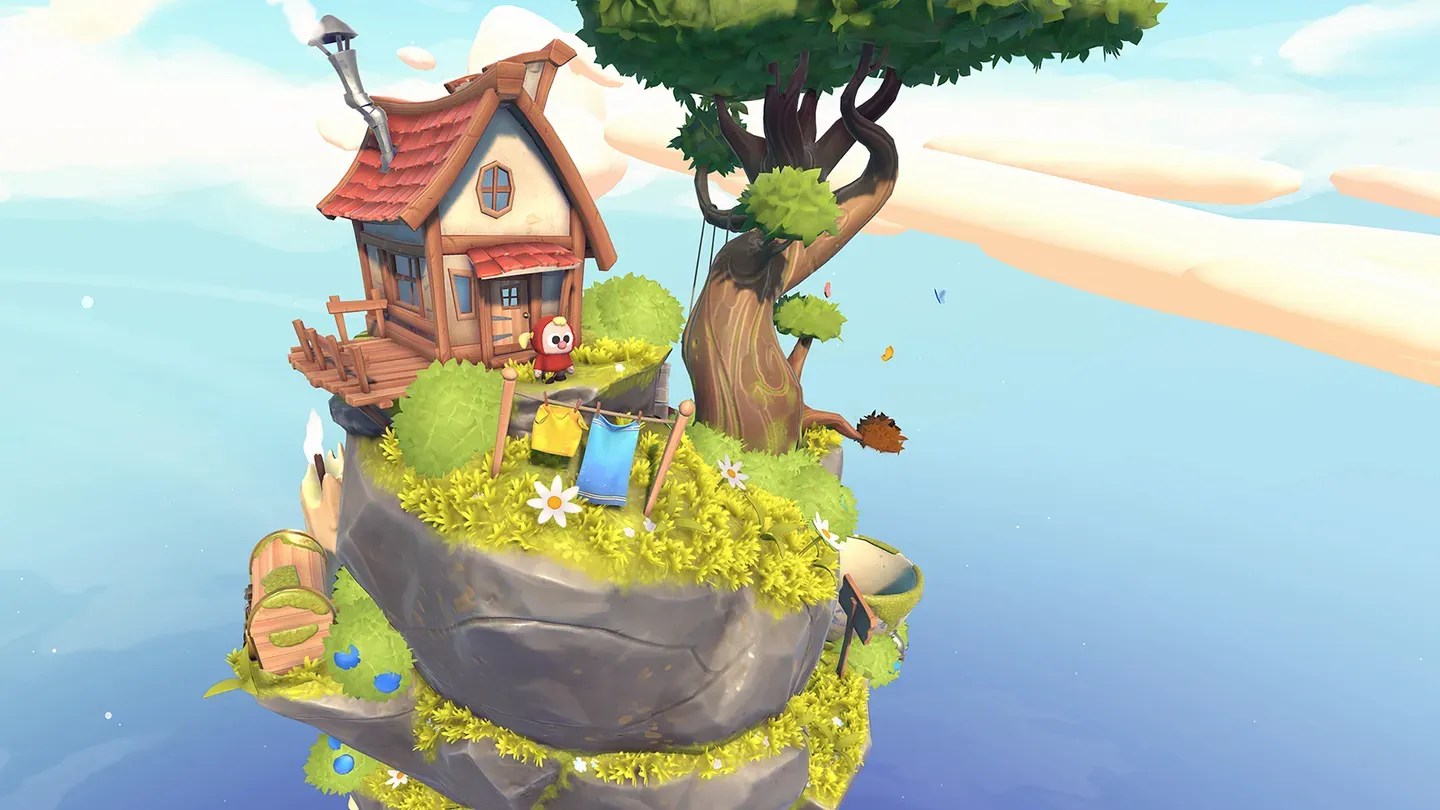
Each level is a compact miniature world with pets to uncover and interactions to test. You do not walk through a giant map. You stand or sit near a small world and manipulate it. Pull, push, spin, pick up, tilt, look behind objects, and test suspicious props. The puzzles are light, but the joy is in the discovery rhythm.
That rhythm is important for buyers. If you want hard logic puzzles that make you fill a notebook, this is not the strongest pick. If you want a low-pressure VR session where the puzzle solution often begins with, ‘what if I touch that?’, it lands much better.
The Diorama Design Is the Main Attraction

The pirate-style world is a good example of the game’s appeal. The scene is not just background art. It is a puzzle container. Small animals, buttons, props, moving pieces, and visual jokes are tucked into a place that feels like a childhood playset brought to life.
This is also why the app remains easy to recommend even years after release. It does not depend on current multiplayer population, live-service events, or seasonal updates. The value sits inside the crafted scenes.
A Puzzle Game That Feels More Gentle Than Clinical

Many VR puzzle games are clever but cold. The Curious Tale of the Stolen Pets goes the other way. The story framing is warm, nostalgic, and family-centered. The game uses your grandfather’s voice and childhood memories to give the puzzle worlds emotional shape.
That does not mean the story is heavy. It means the world has a reason to feel tender. You are not just solving boxes. You are revisiting memories, looking for missing pets, and gradually understanding why these miniature scenes matter.
The Childhood-Memory Framing Helps It Stand Out
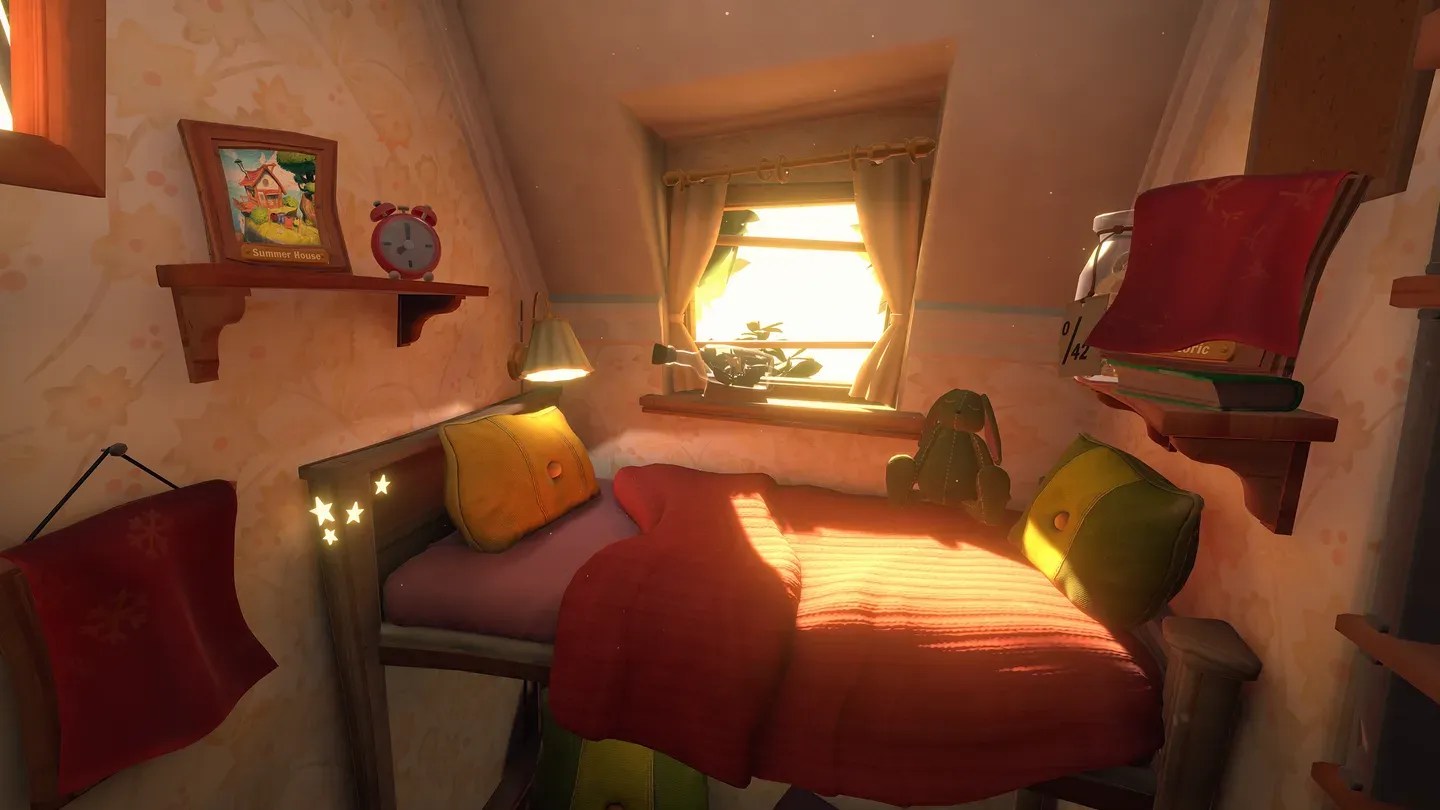
The bedroom and memory-space imagery gives the game a distinct identity. A lot of Quest recommendations chase spectacle. This one is small enough to feel personal. It can be a good first VR purchase because it shows presence without asking the player to manage movement, combat, reloads, multiplayer voice chat, or physical intensity.
For parents, that matters. For adults who are tired and want one calm session before bed, it also matters. This is the sort of app that makes the headset feel less like gym equipment and more like a little cabinet of wonders.
Comfort and Hand Tracking

Comfort is one of the biggest practical reasons to consider it. The Steam page describes comfortable VR play with no artificial movement or camera turning, and Quest-era coverage highlighted hand-tracking support. In practice, the diorama format means the player controls the pacing. You can sit, look, reach, and stay in a scene as long as you need.
Hand tracking also makes conceptual sense here. This is a game about touching little worlds. Controllers work, but direct hands can make the whole experience feel closer to moving pieces in a physical toy set.
Price, Rating, and Community Signals
Meta currently shows a 4.4 out of 5 rating from about 786 ratings. Steam currently lists the game at $6.99 with Very Positive user sentiment, and PlayStation Store currently shows a $6.99 U.S. price with a 4.2-star range rating from roughly 190 players. For Quest buyers, I would treat this as a budget-friendly cozy puzzle app rather than a big premium purchase.
The community signal is not about endless replay value. It is about charm, comfort, and whether the game makes VR feel magical for a few focused sessions. Steam’s public review summary sits at Very Positive, and the official store rating suggests players who buy it generally understand the tone: short, sweet, tactile, and carefully made.
What It Does Better Than Many Puzzle Apps
Its best advantage is readability. You usually understand what kind of thing the game wants from you: look closer, touch more, experiment gently, and search the whole scene. That makes it welcoming for first-time VR users without becoming a passive experience.
It also respects scale. A lot of VR games try to impress by making the world enormous. The Curious Tale of the Stolen Pets impresses by making the world inspectable. That is a different kind of magic, and Quest still benefits from apps that show off that side of VR.
Where It May Disappoint
The main limitation is length and difficulty. This is not a forever game. It is not a deep campaign, a fitness habit, a competitive platform, or a complex escape-room suite. The puzzles are approachable, and experienced puzzle players may move through them quickly.
It may also feel too gentle if you want the headset to deliver intensity. Anyone who mainly buys shooters, rhythm workouts, or long RPG-style adventures should understand that this is a small cozy course, not a main dish for the month.
Who Should Buy It
Buy The Curious Tale of the Stolen Pets if you want a calm, affordable, family-friendly Quest puzzle game with charm, hand-tracking appeal, and scenes that reward physical curiosity. It is especially easy to recommend for new VR owners, parents, cozy-game fans, and players who liked the miniature-world feeling of A Fisherman’s Tale, Ghost Giant, Moss, or Down the Rabbit Hole.
It is also a useful library pick because it fills a mood slot. When you do not want sweat, stress, competition, or a long session, this can still give you a reason to put on the headset.
Who Should Wait
Wait if you need deep challenge, long playtime, or replay systems. Also wait if you dislike gentle puzzle pacing. The game is charming because it is small, but that same smallness is exactly what some players will bounce off.
If the phrase ‘tiny VR storybook puzzle’ sounds like a compliment, it is probably for you. If it sounds like a warning, trust that instinct.
Official Store Page
Use the official Meta Quest store page to confirm live U.S. pricing, headset compatibility, current rating, and any sale timing before buying.
Official Video
The official Fast Travel Games launch trailer shows the full tone quickly: miniature worlds, hidden pets, cozy interaction, and the kind of puzzle design that depends on looking from the right angle.
Final Recommendation
The Curious Tale of the Stolen Pets is worth recommending because it is a clean reminder that VR does not always need to be bigger. Sometimes it needs to be closer. The app gives Quest owners a warm, low-pressure puzzle adventure with enough tactile interaction to feel meaningfully VR-native.
My recommendation is strongest for cozy players, families, and anyone building a varied Quest library. Buy it when you want gentle wonder. Skip it when you want challenge, length, or adrenaline.
If today's VR stories push you closer to jumping in, this Meta Quest referral can still give you a $30 credit on an eligible headset purchase.
Continue Reading
Stay in the VR guide loop with these related PlayTechDeep articles.
- Ghost Giant on Meta Quest: A Small Diorama Story About Helping Someone Feel Less AloneGhost Giant on Meta Quest: a U.S.-focused app guide covering price, diorama story, Louis, puzzles, comfort…
- Down the Rabbit Hole on Meta Quest: A Wonderland Diorama Adventure That Still Feels MagicalDown the Rabbit Hole on Meta Quest: a U.S.-focused app guide covering price, Wonderland diorama adventure…
- Tentacular on Meta Quest: A Weirdly Sweet Physics Puzzle Game With Giant Wobbly TentaclesTentacular on Meta Quest: a U.S.-focused app guide covering price, physics puzzles, giant tentacles, sandbox…
- Cubism on Meta Quest: The Clean Spatial Puzzle Game That Makes Mixed Reality Feel NaturalCubism on Meta Quest: a U.S.-focused app guide covering price, spatial puzzles, hand tracking, Mixed Reality…
Sources
- Official Meta Quest store page
- VRDB price, rating, device, and media snapshot
- Steam price, feature, review, and hand-tracking summary
- Launch platform and gameplay overview
- PlayStation Store price and rating context
- Developer commentary from Fast Travel Games
- Quest hand-tracking coverage
- Official Fast Travel Games launch trailer