

Search answer: is BONELAB a sandbox game?
Yes, BONELAB is best understood as a physics sandbox first and a traditional campaign second. The reason people keep searching it is the body-based physics, avatar system, combat toys, and mod culture; the tradeoff is that it can feel janky or uncomfortable for new VR players.
BONELAB is one of those Meta Quest games that keeps getting searched because people are not only asking whether it is good. They are asking whether it is for them. That distinction matters. BONELAB is ambitious, messy, physical, experimental, and sometimes deeply awkward. It can feel like the future of VR interaction and a fight with a shopping cart at the same time.
Quick sandbox answer
BONELAB is for experienced VR players who want a physical sandbox more than a clean campaign. Buy it for avatars, mod culture, melee and gun physics, test chambers, and weird interaction experiments. Wait if you are new to VR or easily frustrated by physics jank.
- Best fit: Boneworks-curious Quest owners and sandbox players.
- Main appeal: body-based physics, avatar stats, mod culture, and experimental combat.
- Skip if: you want the smoothest story game or a gentle first VR shooter.
That is exactly why it deserves a clear buyer guide. If you want a polished roller-coaster campaign, BONELAB may frustrate you. If you want a physics playground with guns, melee weapons, body-based avatars, mod culture, test chambers, arenas, and weird underground lab energy, it still occupies a space few Quest apps can touch.
Meta Quest referral
If you use this link when buying a Meta Quest headset, you can receive a $30 store credit. Only use it if it feels useful.
Quick Buyer Snapshot
- Genre: experimental VR physics action, shooter, melee combat, sandbox, and mod-friendly adventure.
- Developer / publisher: Stress Level Zero.
- U.S. price context: $39.99 in current U.S. public store snapshots.
- Best for: players who want physics interaction, body-based VR systems, sandbox experiments, weapons, mods, and Boneworks-style design on Quest.
- Play mode: single-player in public store snapshots.
- Comfort context: this is not a gentle beginner app; physics-heavy movement and body simulation can be demanding.
- Headset support: Meta lists support for Quest 2, Quest Pro, Quest 3, Quest 3S.
- Content note: mature combat, firearms, melee violence, blood effects, and self-harm/environment damage warnings appear in public store descriptions.
Why BONELAB Still Gets Attention
BONELAB has staying power because it treats VR as a body problem, not just a camera problem. Most shooters ask whether you can aim. BONELAB asks whether the object has weight, whether your arm collides correctly, whether your avatar body fits the space, whether a crowbar behaves like a crowbar, and whether a fight can become ridiculous because the simulation refuses to behave like a flat-screen animation.
Steam describes BONELAB as an experimental physics action game filled with weapons, enemies, challenges, secrets, and the freedom to escape reality or wreak havoc. That short description is still the cleanest way to understand it. This is not a traditional campaign first. It is a lab for physical VR ideas.
How It Plays on Quest
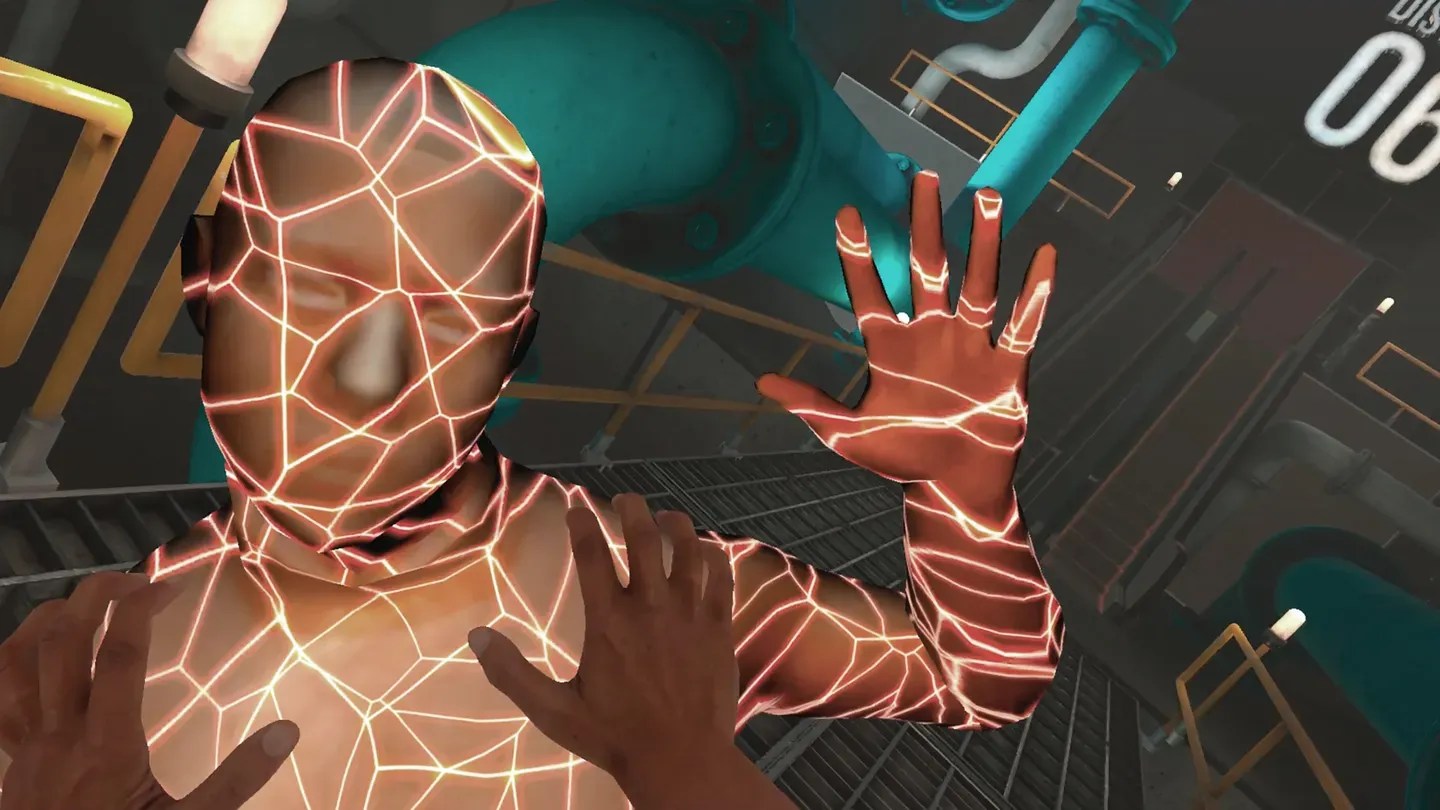
The campaign sends you through a strange underground research facility, arena spaces, obstacle courses, tactical trials, sandboxes, experimental modes, and hidden progression paths. You shoot, climb, swing, lift, grab, fight, and solve small environmental problems through physical interaction rather than clean button prompts.
That can be thrilling when it clicks. A melee weapon catches against an enemy, a gun reload becomes a hand skill, a climb asks you to actually manage your body, and a physics object turns into an improvised solution. It can also be clumsy. BONELAB’s personality comes from that friction.
The Avatar System Is the Secret Sauce
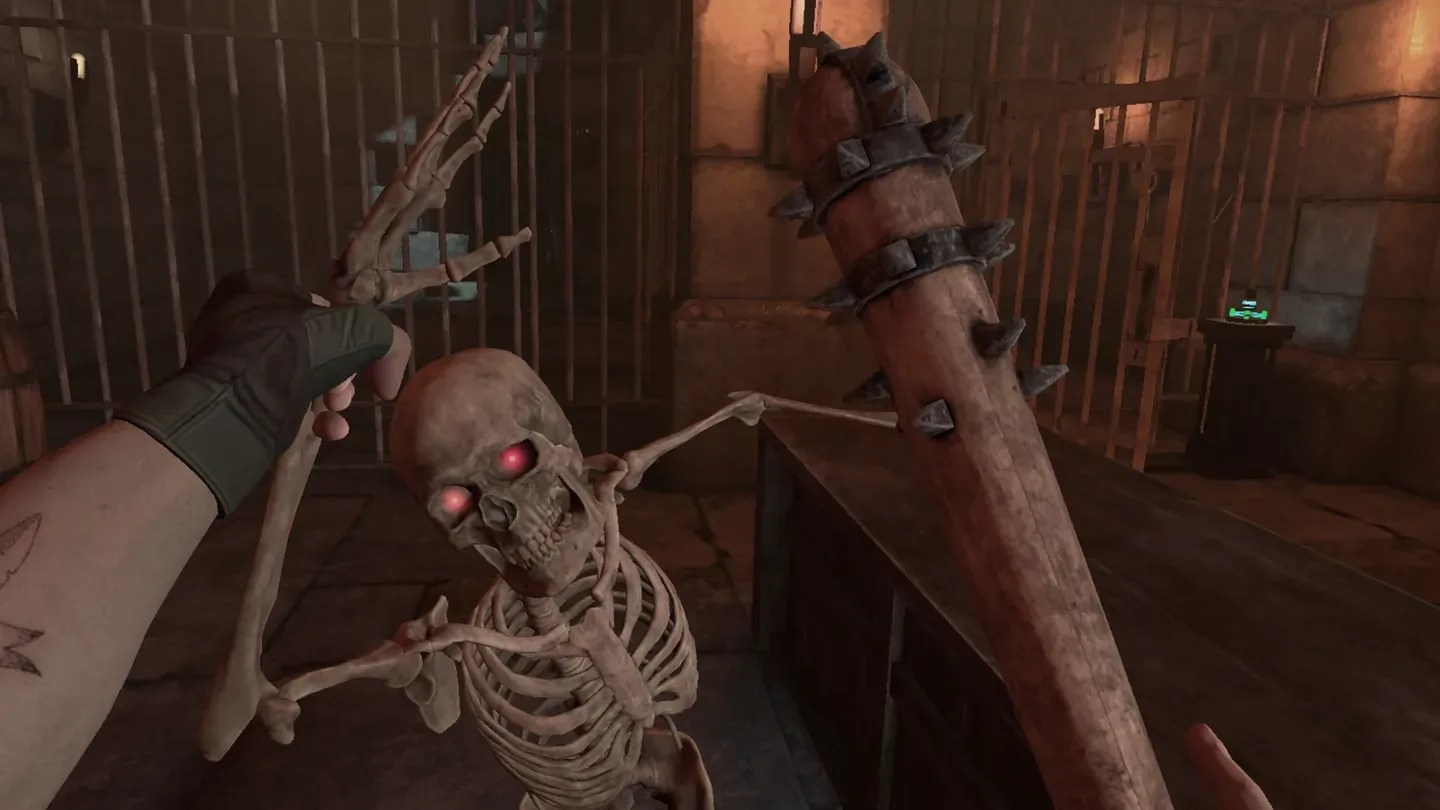
The avatar system is the feature that makes BONELAB more than a weapon sandbox. Public descriptions emphasize custom avatar importing and physical stats that match different bodies. Bigger, smaller, stronger, faster, and stranger avatars do not just change appearance; they change how the world responds to you.
That body-swapping idea is unusually important for VR. In many games, your avatar is cosmetic. In BONELAB, body type affects reach, strength, scale, and movement feel. It turns character identity into mechanics, and that is one reason the game became such a mod and sandbox talking point.
Weapons Are Fun Because the Physics Are Unstable
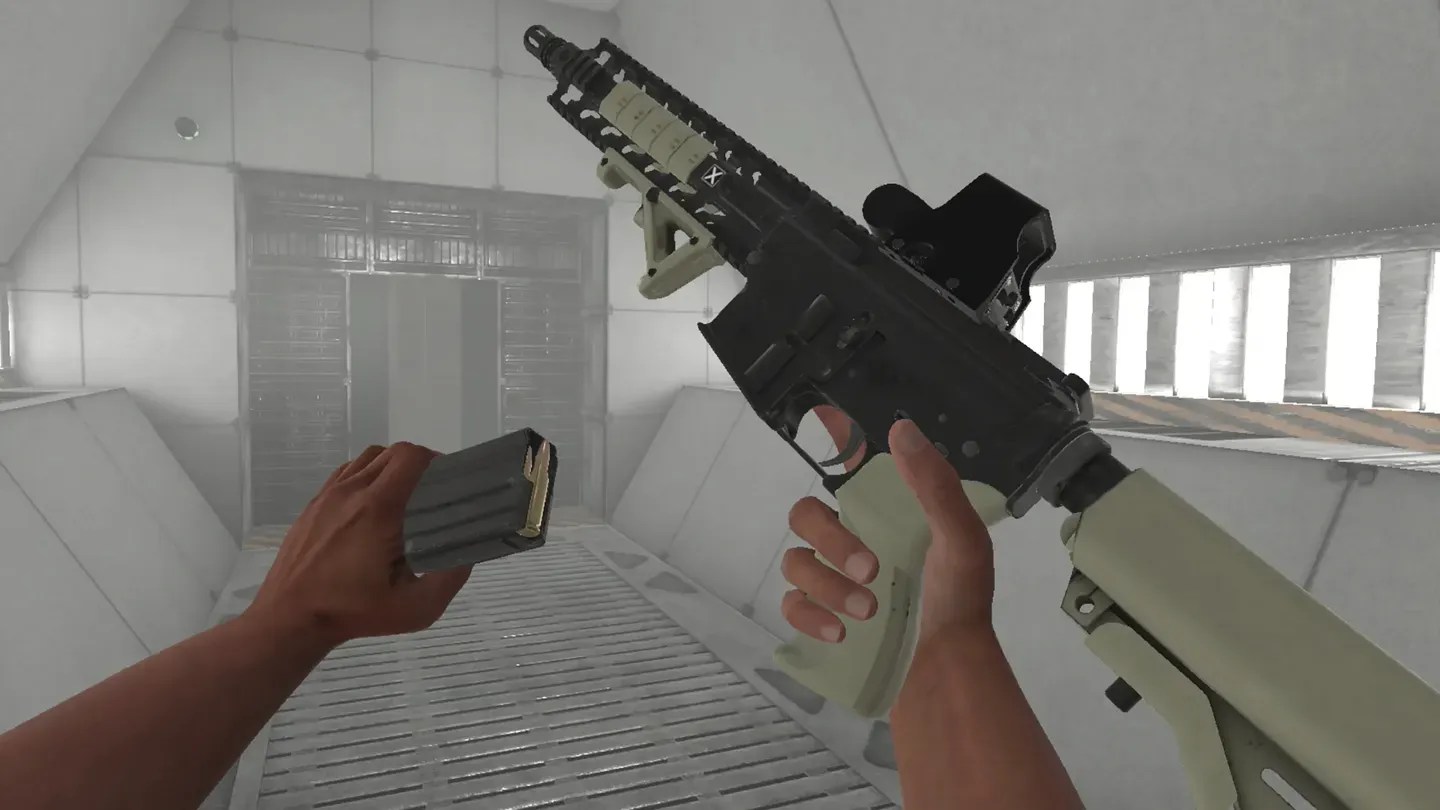
BONELAB includes firearms, melee weapons, exotic tools, and physical combat encounters. But the weapons are not interesting only because there are many of them. They are interesting because they interact with the simulated body. Reloading, bracing, grabbing, swinging, and missing all have a tactile edge.
If you come from Pavlov Shack or Breachers, BONELAB will feel less competitively clean. That is intentional. Pavlov and Breachers are about readable shooting systems. BONELAB is about what happens when the whole world is a physics toy, including your own arms.
Sandbox, Mods, and Experiments Keep It Alive
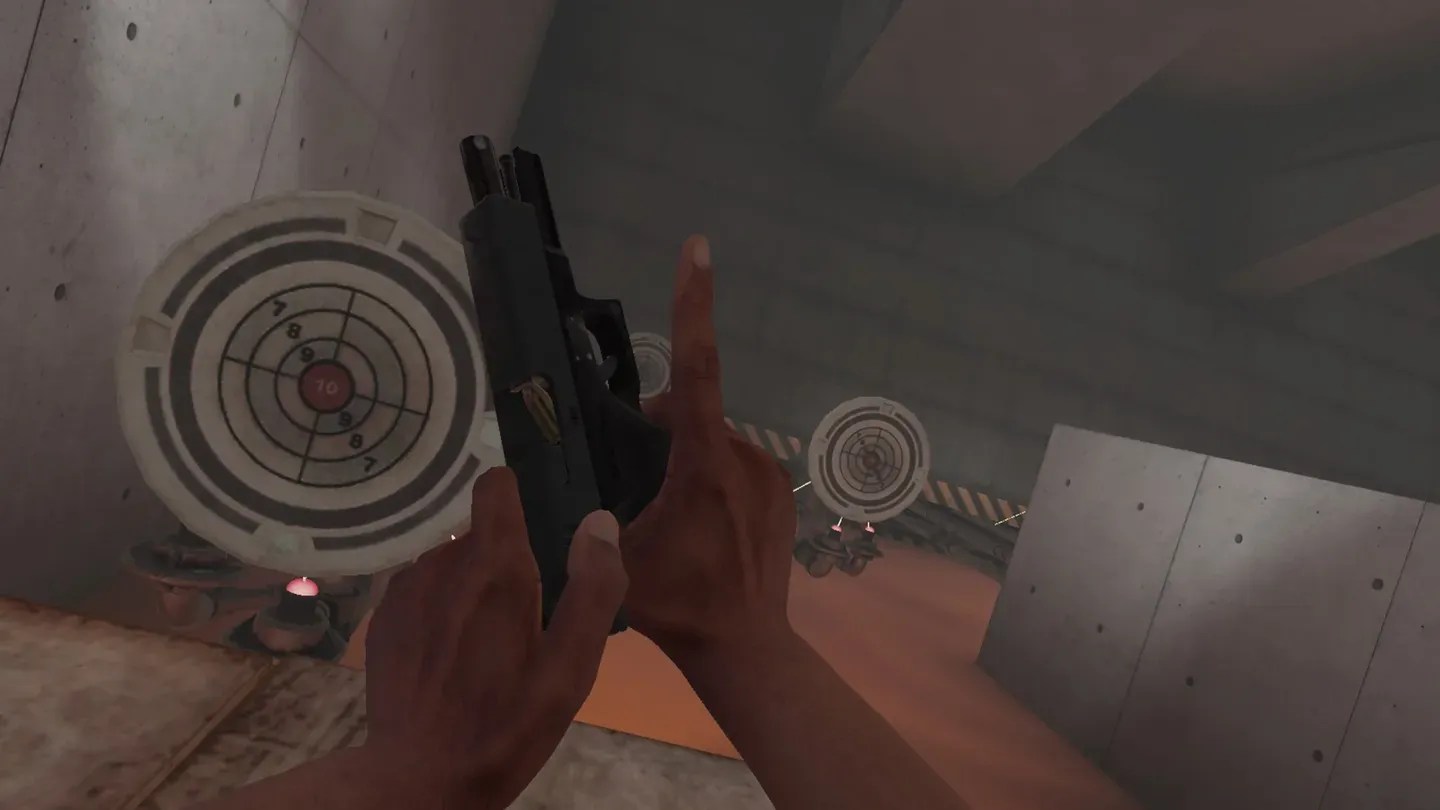
The reason BONELAB keeps circulating years after release is not only the campaign. It is the experimental layer around it. Arenas, sandboxes, trials, avatar importing, and user-generated content give the game a long tail. People come back to test bodies, weapons, levels, and interactions.
That also means the best version of BONELAB is partly self-directed. If you need the game to constantly tell you what to do, it may feel thin or fragmented. If you like poking systems until something funny or impressive happens, it becomes much more valuable.
Price, Rating, and Community Signals
Meta currently shows a 4.6 out of 5 rating from about 35,617 ratings. AltLab and VRDB-style public snapshots show BONELAB as a high-volume Quest title with roughly 4.6-star sentiment and tens of thousands of ratings, while Steam currently shows Mostly Positive overall English reviews and Very Positive recent reviews. The important signal is not universal love; it is durable interest.
At $39.99, BONELAB is one of the pricier Quest recommendations in this series. The price makes sense only if you want the physics sandbox identity. If you only want a polished campaign, cheaper apps may satisfy you faster. If you want one of Quest’s most discussed interaction playgrounds, the value case gets stronger.
What It Does Better Than Most Quest Games
BONELAB’s advantage is ambition. It tries to bring a PCVR-style body simulation fantasy to standalone hardware. Android Central’s launch-era coverage framed it as a game pushing the graphical and computational limits of Quest 2, and that context still explains why the app feels so unusual on Quest.
It is not the most comfortable, approachable, or polished recommendation. It is the recommendation for readers who want to know where VR gets weird. The answer is often: in a lab, with a crowbar, a body rig, and a room full of things that should probably not be thrown but absolutely will be.
Who Should Buy It
Buy BONELAB if you want physical VR systems, weapons, sandbox freedom, avatar experiments, mods, and a game that rewards curiosity more than passive consumption. It is a strong fit for players who already understand VR comfort, want something more systemic than a normal shooter, and do not mind rough edges.
It is also a useful app for people who loved the idea of Boneworks but primarily play on Quest. BONELAB is not simply a shooter. It is an argument that VR should simulate hands, bodies, mass, and chaos even when that makes the game harder to tame.
Who Should Wait
Wait if you are new to VR, sensitive to motion, easily frustrated by physics jank, or mainly looking for a clean story campaign. BONELAB can feel brilliant one minute and irritating the next. That volatility is part of the deal.
Also wait if $39.99 feels high for a game you may only sample. Watch gameplay first. If the physics sandbox looks exciting, it probably is. If it looks confusing or uncomfortable, trust that reaction. BONELAB does not hide what it is.
Official Store Page
Use the official Meta Quest store page to confirm live U.S. pricing, supported headsets, comfort notes, current rating, and content details before buying.
Official Video
The Meta Quest launch trailer gives the cleanest quick look at the lab setting, body-driven action, weapons, and experimental tone.
Final Recommendation
BONELAB is worth recommending because it still feels like a rare Quest app with a strong point of view. It is not content to be smooth. It wants to be physical. It wants you to feel the body, the weapon, the object, the mistake, and the strange little consequence of touching a world that pushes back.
My recommendation is strongest for experienced VR players, sandbox fans, Boneworks-curious Quest owners, and anyone who wants a cult physics app rather than a safe campaign. BONELAB is not the easiest game to love. That is partly why people keep talking about it.
If today's VR stories push you closer to jumping in, this Meta Quest referral can still give you a $30 credit on an eligible headset purchase.
Continue Reading
Stay in the VR guide loop with these related PlayTechDeep articles.
- Skydance’s BEHEMOTH on Meta Quest: Giant Boss Fights, Brutal Melee, and a Premium VR FantasySkydance’s BEHEMOTH on Meta Quest: a U.S.-focused app guide covering price, giant boss fights, brutal melee…
- Ancient Dungeon on Meta Quest: A Co-Op Roguelite Dungeon Crawler With Real VR HandsAncient Dungeon on Meta Quest: a U.S.-focused app guide covering price, co-op roguelite dungeon crawling…
- Marvel’s Iron Man VR on Meta Quest: Is Flying as Tony Stark Still Worth It?Marvel’s Iron Man VR on Meta Quest: a U.S.-focused app guide covering price, flight combat, Tony Stark story…
- Until You Fall on Meta Quest: A Neon Sword-Fighting Roguelite That Still Hits HardUntil You Fall on Meta Quest: a U.S.-focused app guide covering price, neon sword combat, roguelite runs…